
The history of
Polish Alpine
skiing
From Helena Marusarzówna to the Bachleda-Curuś family. Alpine champions and a sporting tradition also carried onto the ice by Katarzyna Bachleda-Curuś.
Ski racing measures time in hundredths of a second. Its history is measured in generations.
A result at the finish line contains more than a single run. It holds a family home, a coach recognising talent and a slope revisited hundreds of times. This next chapter in Polish skiing follows those people: champions, siblings and families for whom winter became more than a season.
Selected people and connections across generations, from the 1930s to the 2026 Olympics.
First came a young woman who wanted to ski faster.
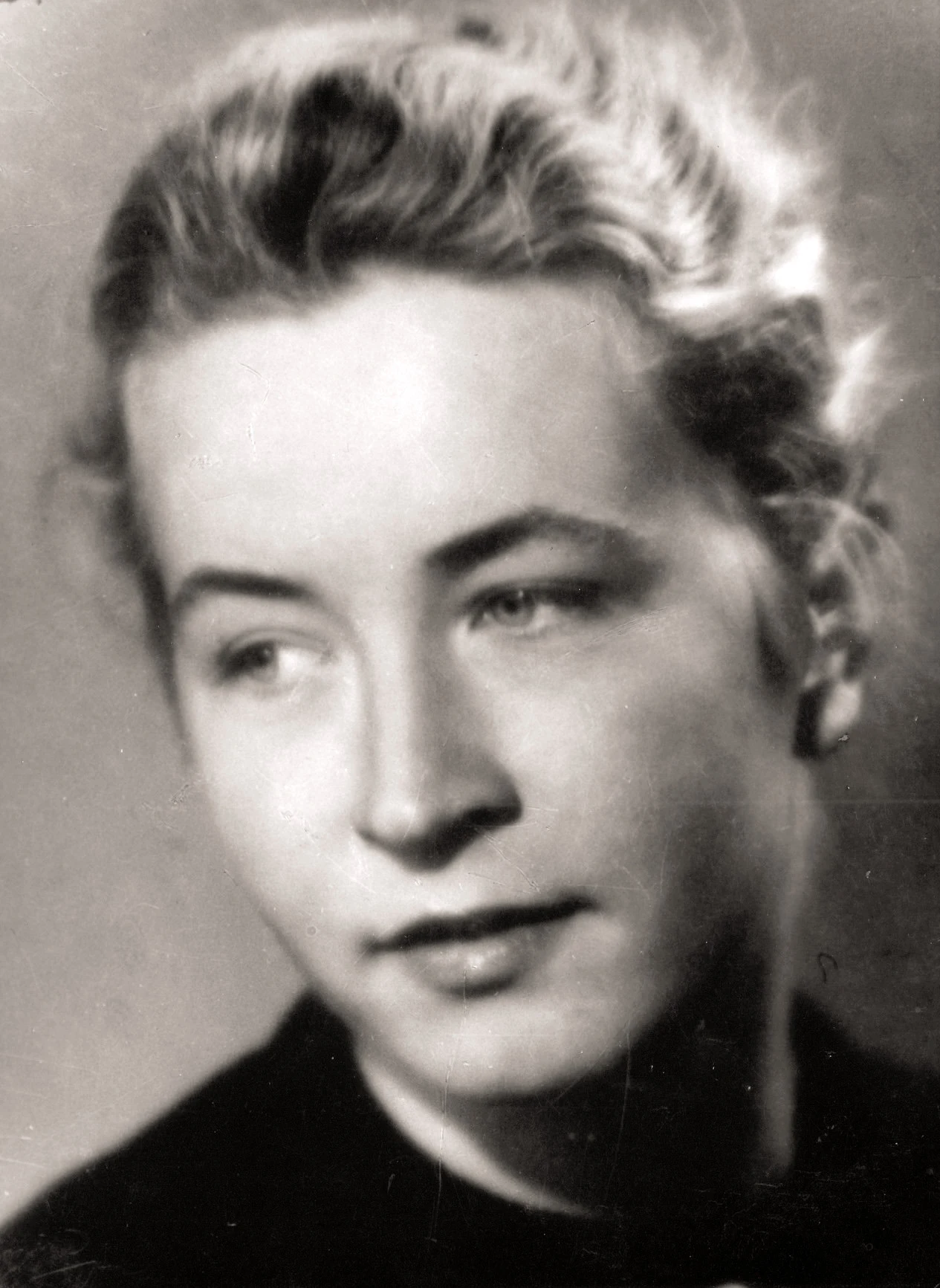
Our previous story followed people discovering how far skis could carry them. Now the rhythm changes: gates, timing and the ambition to ski a course better than the competition come into view. Helena Marusarzówna holds an important place in that transition. The younger sister of Stanisław was building a sporting reputation of her own, winning seven Polish championship titles in Alpine events before the war.
Her skiing world grew out of Zakopane, where snow, competition and a community able to recognise talent were close at hand. An archival portrait restores a face to a familiar name. Behind the memorial race title was a young athlete with ambitions, daily training and a future still waiting to unfold.
War interrupted her career. She became a courier on the route between Zakopane and Budapest, was arrested and was murdered by the Germans in 1941. Her sporting life cannot be separated from that fate. The memorial bearing her name alongside Bronisław Czech’s became a stage for later generations of racers. Remembrance remained part of a living sport.
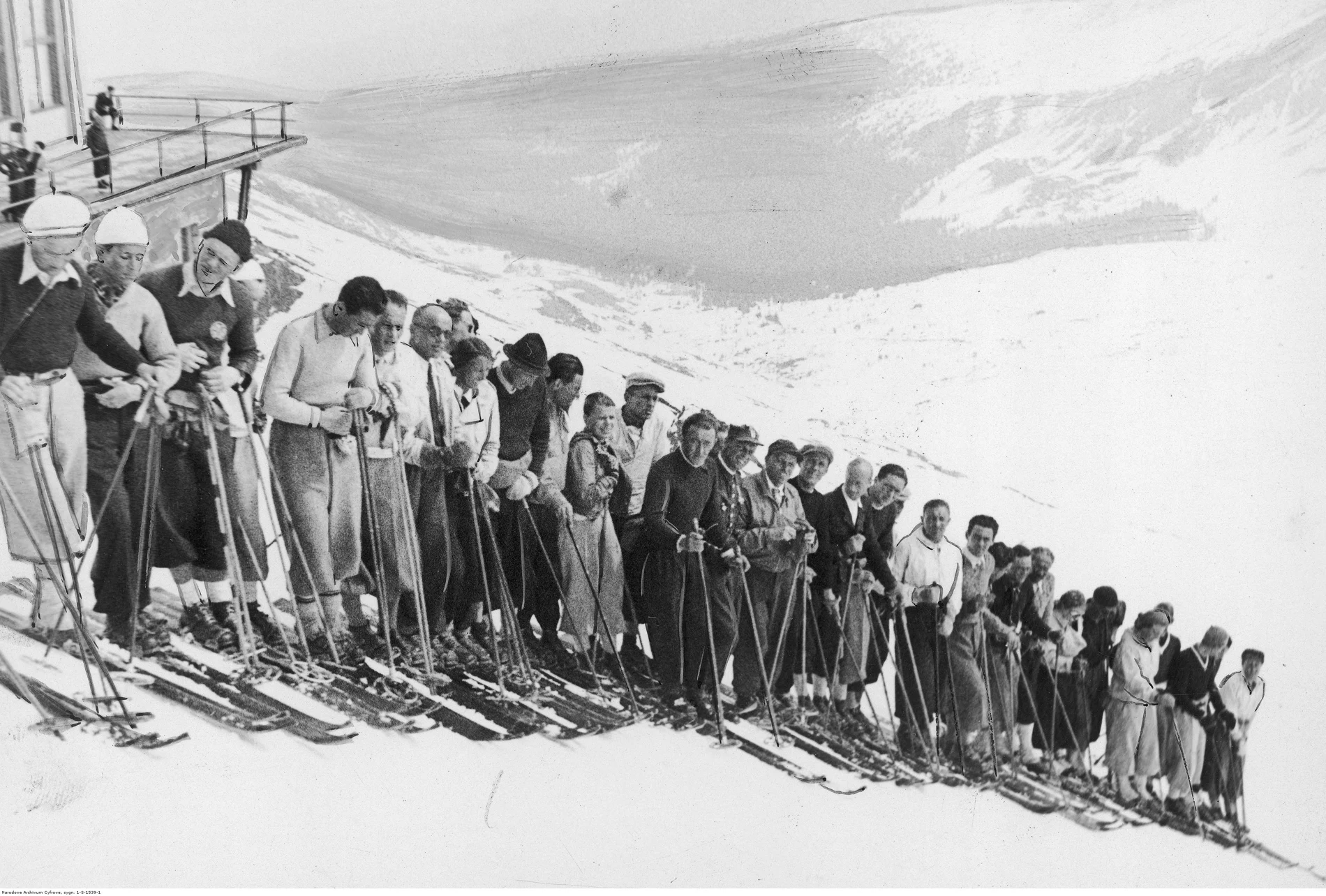
NAC / Koncern Ilustrowany Kurier Codzienny · public domain · Image source ↗
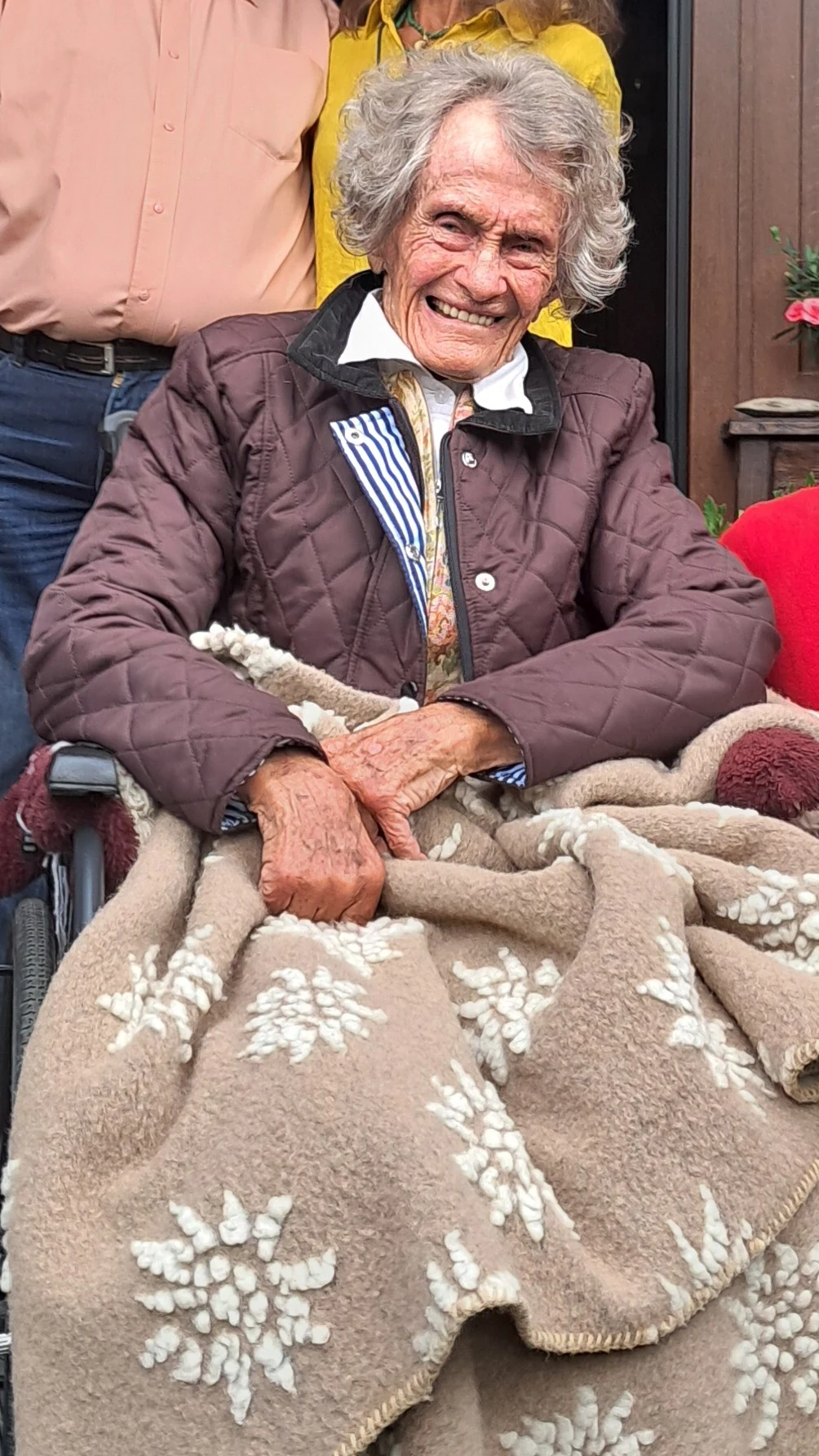
Vojthas95 · CC BY-SA 4.0 · Source ↗
Barbara, Teresa and Maria. Polish women take on the world.
Barbara Grocholska-Kurkowiak made Zakopane her home after the war. A participant in the Warsaw Uprising, later an outstanding skier, coach and poet, she cannot be understood through results alone. Yet her 25 Polish championship titles and appearances at Oslo 1952 and Cortina 1956 show the strength of her sporting career.
Teresa Kodelska-Łaszek brings another connection into the story. Her father was Aleksander Kodelski, the builder of the Kasprowy Wierch cable car. One of our articles follows an engineer changing access to the mountains; this one meets his daughter, a Polish champion and Oslo Olympian. She also became a professor of economics. Her life takes the story beyond Podhale to Warsaw’s university sporting community.
Maria Kowalska, later Wania and Suchodolska, belongs beside them. This Alpine skier should not be confused with cross-country skier Maria Kowalska, née Gąsienica-Bukowa. In 1956 she won the prestigious slalom at Grindelwald ahead of celebrated international rivals. She competed at both Oslo and Cortina. Her victory reminds us that Polish women were producing major Alpine performances well before the World Cup existed.
Two generations. The same appetite for racing.
Jan Gąsienica-Ciaptak began competing before the war and became a central figure in Polish skiing after it. He appeared at the Winter Olympics in St. Moritz, Oslo and Cortina. Early specialisation was not yet taken for granted: at the 1948 Games he competed in both ski jumping and Alpine skiing. Modern sporting divisions were emerging from a much broader mountain skill set.
For years he helped set the standard on Poland’s race courses. A self-taught skier remembered for courage and technique, he gave races a character spectators could recall as readily as the finishing order. In that world, skiing was a way of life and a point of reference for younger athletes.
His son Maciej followed a sporting path too, becoming a university world champion and a multiple Polish champion. Alongside the Bachledas, the Ciaptaks give this story another thread of family continuity. A name and an early relationship with snow can be inherited; a place on the podium cannot. Each generation has to do its own work and find its own racing rhythm.
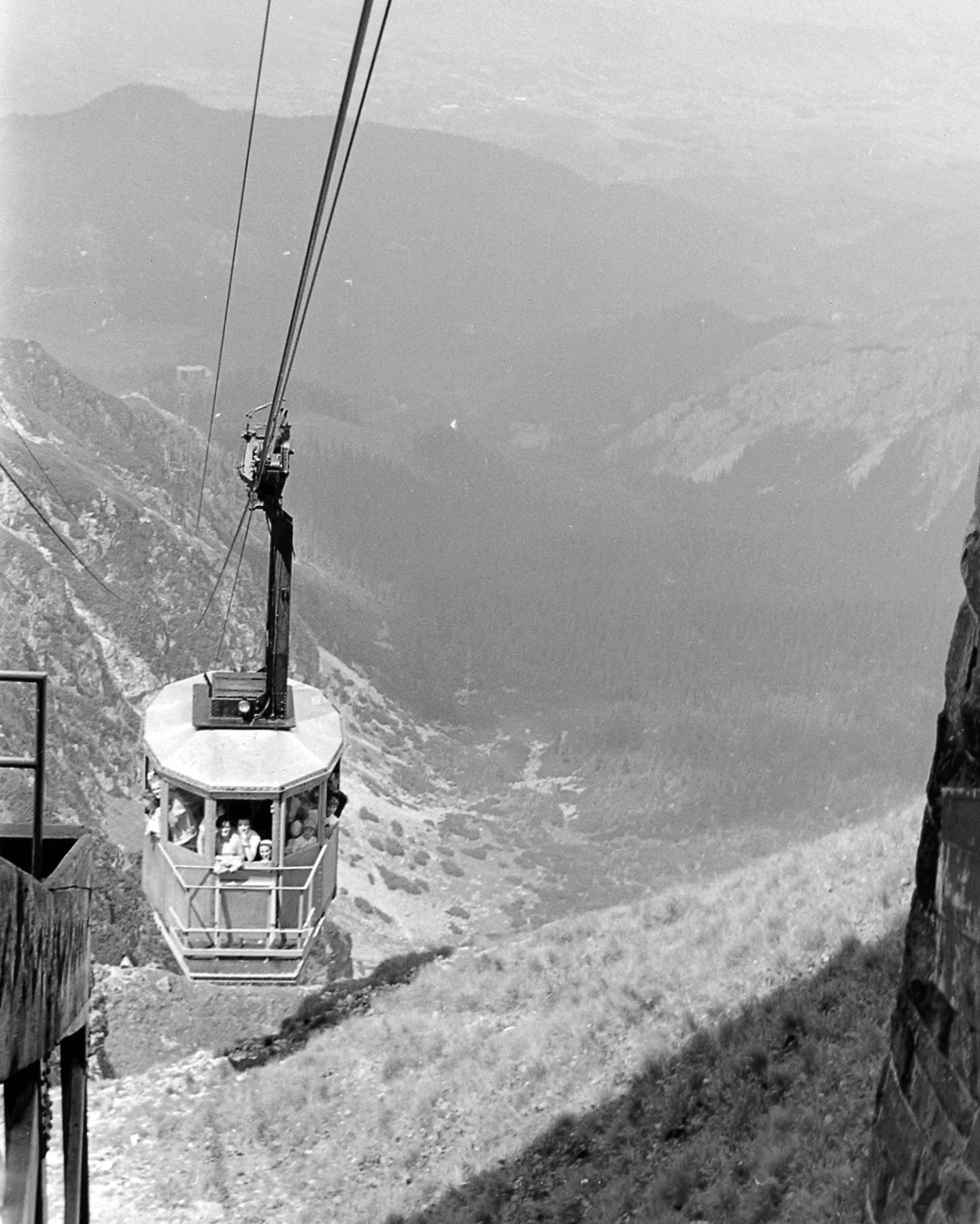
FOTO:FORTEPAN / Szent-tamási Mihály · 9651 · CC BY-SA 3.0 · archive record · CC BY-SA 3.0
Andrzej Gąsienica-Roj and the power of a good teacher.
There is no empty space between the post-war champions and the Bachledas’ international successes. There is the work of racers and coaches, including Andrzej Gąsienica-Roj. An Olympian at Oslo and Cortina, he later helped shape the national team. Among his athletes were Andrzej and Jan Bachleda and Andrzej Dereziński, who competed at Innsbruck in 1964.
Stefan Dziedzic also belongs in this landscape. A versatile competitor who moved from Nordic to Alpine events, he later coached women including Barbara Grocholska and Maria Kowalska. Józef Marusarz, a five-time Polish champion and three-time Alpine Olympian, is another important figure. These names reveal a community extending beyond its most famous individual stars.
Skiing history includes work rarely visible on a podium: setting gates, repeating runs, adjusting technique and learning patience. A coach can be present in a success even when the camera shows only the racer. That is why Gąsienica-Roj’s name belongs beside those of the athletes he helped develop.
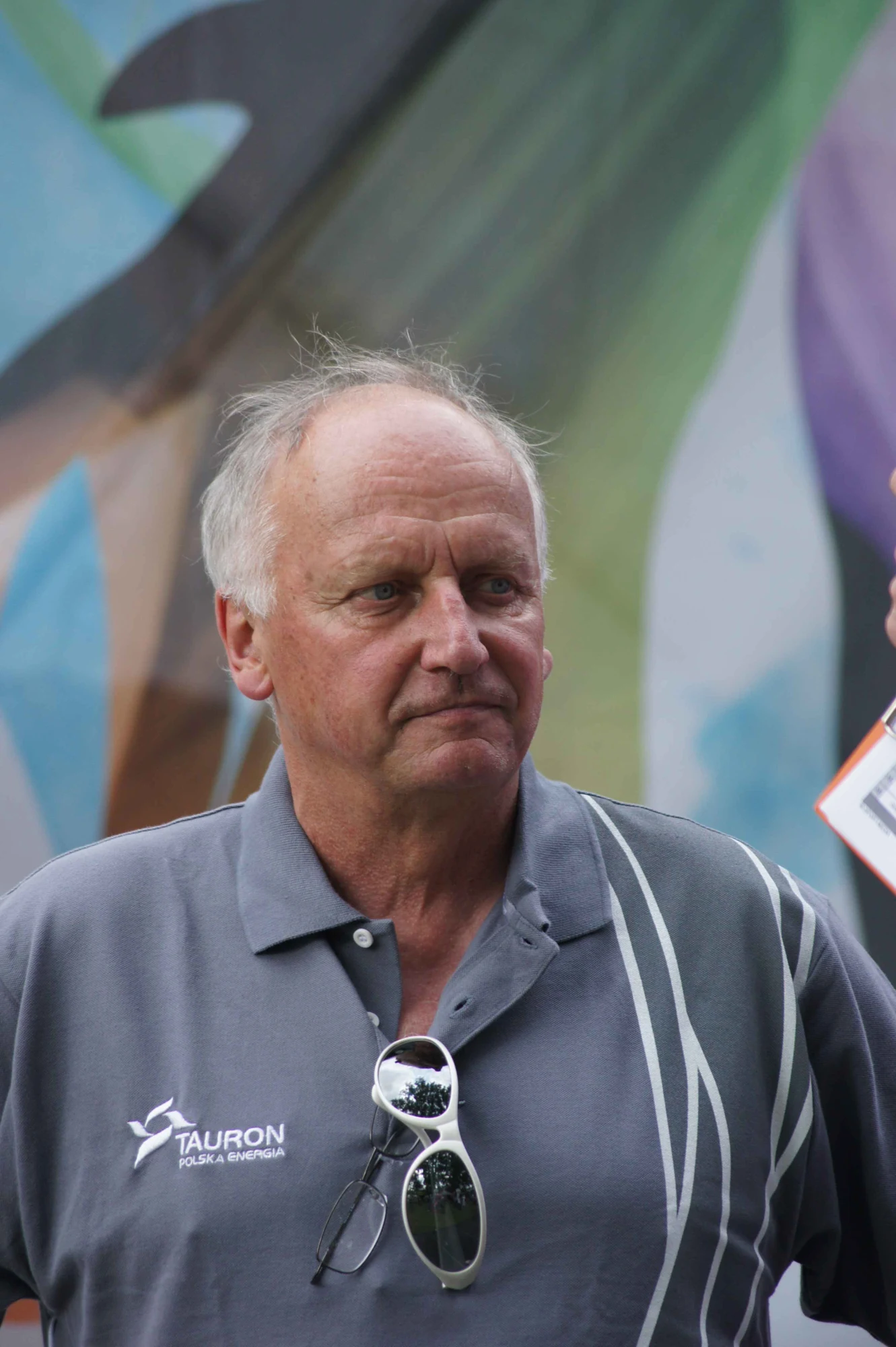
Sławek (Sławek Skonieczny) · CC BY-SA 2.0 · Source ↗
A home where skiing and music belonged together.
Before Andrzej ‘Ałuś’ Bachleda-Curuś won his medals, there was a family: his father Andrzej, a skier and opera singer, and his mother Maria Gąsienica-Wawrytko, a slalom skier and Polish champion. Sport and music were parts of the same household. The family story begins with the atmosphere in which Andrzej and his younger brother Jan grew up.
Ałuś carried that tradition onto the world stage. He won World Championship bronze in Alpine combined at Val Gardena in 1970 and silver in the same discipline at St. Moritz in 1974. These were World Championship medals, rather than Olympic medals. In 1972 he also won the World Cup slalom at Banff. Those results occupy a special place in Polish Alpine history.
Behind the dates lay years of training in Zakopane and abroad, and competition against the world’s strongest racers. Combined demanded different abilities; slalom demanded speed through precision. Bachleda showed that a skier raised below the Tatras could compete for the highest places far from home. He represented Poland at the Grenoble and Sapporo Winter Olympics.
Jasiek. A sporting life of his own.
Jan Bachleda-Curuś deserves his own place in this account. Ałuś’s younger brother, also known as Jano, was a multiple Polish champion and one of the leading Polish Alpine skiers of his generation. A celebrated family name offers a strong starting point, but can also tempt a storyteller to explain one life through another person’s achievements. That would diminish Jan’s own career.
He finished eleventh in slalom at the 1976 Innsbruck Olympics. He was also a Universiade medallist and enjoyed success at the Bronisław Czech and Helena Marusarzówna Memorial. His discipline required decisions at speed: the next gate arrived before a racer could undo a mistake at the previous one.
The brothers reveal two parallel sporting paths from the same home. Andrzej won World Championship medals; Jan built his own record in national and international racing. Together they form an important part of Zakopane’s skiing tradition, a story of talent, work and sporting closeness in which each athlete must be understood in his own right.
Twin sisters among the world’s best.
In the 1980s, Polish slalom gained two remarkable protagonists: twin sisters Dorota and Małgorzata Tlałka. They too grew up in a sporting household. Their father Jan was a speed skater and their mother Stanisława a cross-country skier. Once again, a family’s everyday relationship with sport became the beginning of international competition.
On 14 December 1984, Dorota won the World Cup slalom at Madonna di Campiglio. Earlier that year, Małgorzata had finished sixth in the Olympic slalom at Sarajevo; she also earned World Cup podium finishes. Their achievements are not interchangeable: each sister wrote her own chapter. Together, their regular presence near the top made the Tlałka name stand for much more than a single successful race.
Both later represented France and competed under the French flag at Calgary. Their careers therefore also appear under the names Tlałka-Mogore and Tlałka-Długosz. Keeping that continuity clear helps a reader follow the same athlete through different stages of her life. Dorota died in 2025; her World Cup victory remains an important landmark in Polish Alpine skiing.
Dorota Tlałka
World Cup slalom victory.
Madonna di Campiglio · 14 December
Małgorzata Tlałka
6th place in the Olympic slalom.
Sarajevo · 17 February
Another Andrzej. Between the mountain and the stage.
Ałuś’s son, Andrzej Bachleda-Curuś III, carried the family name into another generation of international skiing. His sporting childhood connected the Tatras with France. He trained within the Saint-Gervais club environment and later represented Poland. The courses, support systems and competition were changing, while the family connection remained familiar.
At Nagano in 1998, he finished fifth in Alpine combined. Four years later, at Salt Lake City, he was eleventh in slalom. Those performances deserve recognition independently of his father’s medals. The next Bachleda was not repeating a ready-made career: he was creating his own in a different sporting era.
Music remained another important part of his life. A photograph from a Montreal concert shows him away from racing, in 2020. It completes the family motif: grandfather, father and son meet in a story where sporting discipline sits beside artistic sensitivity. A family’s history continues beyond its final timed run.
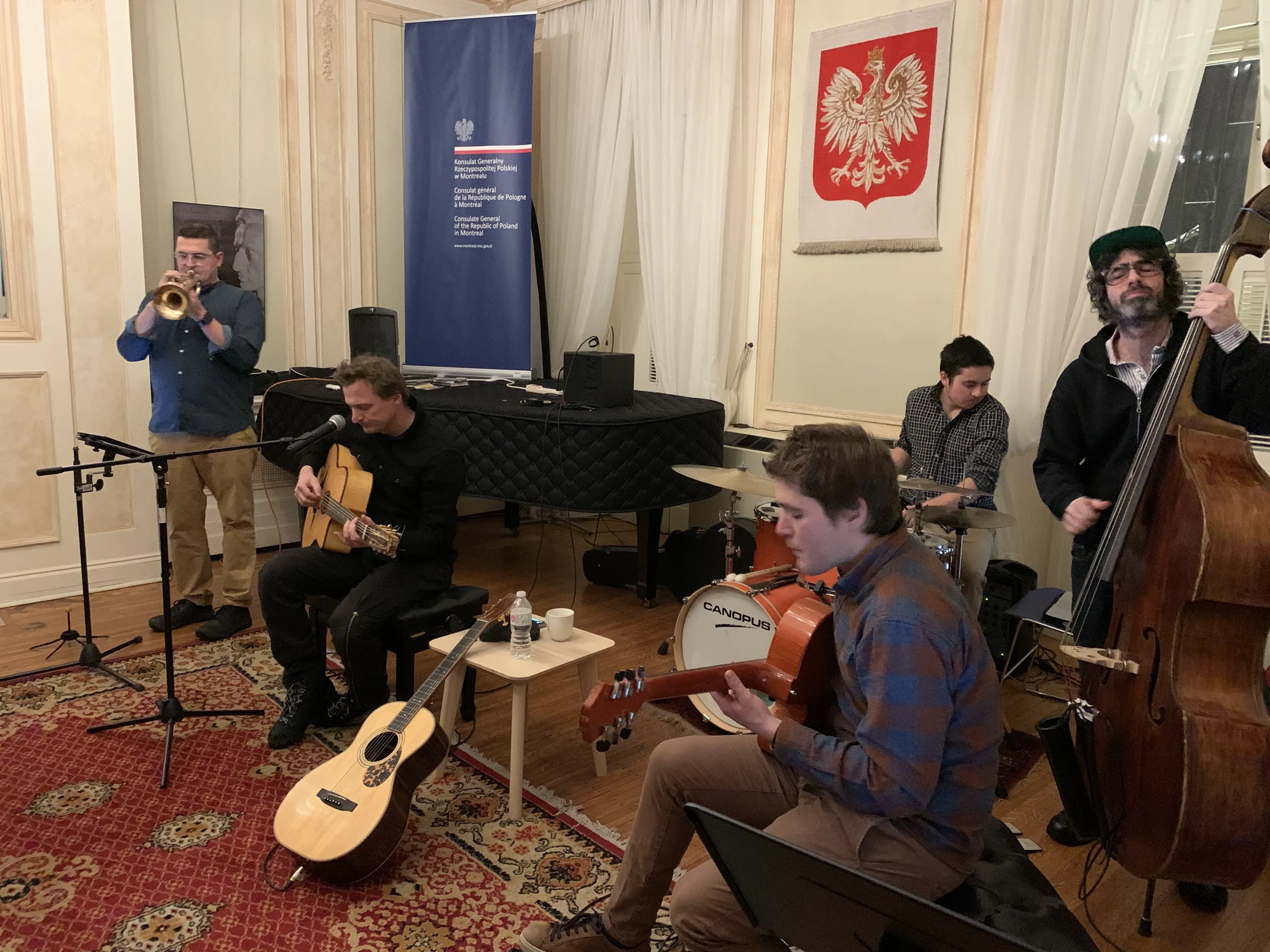
MSZ / Ministry of Foreign Affairs of Poland · CC BY 3.0 PL · Source ↗ · Original publication
Katarzyna Bachleda-Curuś. Five Olympics, two medals.
The sporting story of the Bachleda-Curuś family also includes Katarzyna Bachleda-Curuś, née Wójcicka. She skis recreationally; speed skating is the discipline in which she represented Poland at the highest level. Her place in this account shows how the family’s sporting tradition reaches beyond Alpine racing.
Five Olympic appearances span two decades: Salt Lake City 2002, Turin 2006, Vancouver 2010, Sochi 2014 and PyeongChang 2018. Two brought medals in the team pursuit: bronze at Vancouver and silver at Sochi. These were achievements shared with her Polish teammates and important milestones in the history of Polish women’s speed skating.
Katarzyna brings the rhythm of the ice track into the family story: technique, endurance and teamwork. From Alpine gates to the Olympic oval, the setting changes while years of preparation and the ambition to perform at a decisive moment remain.
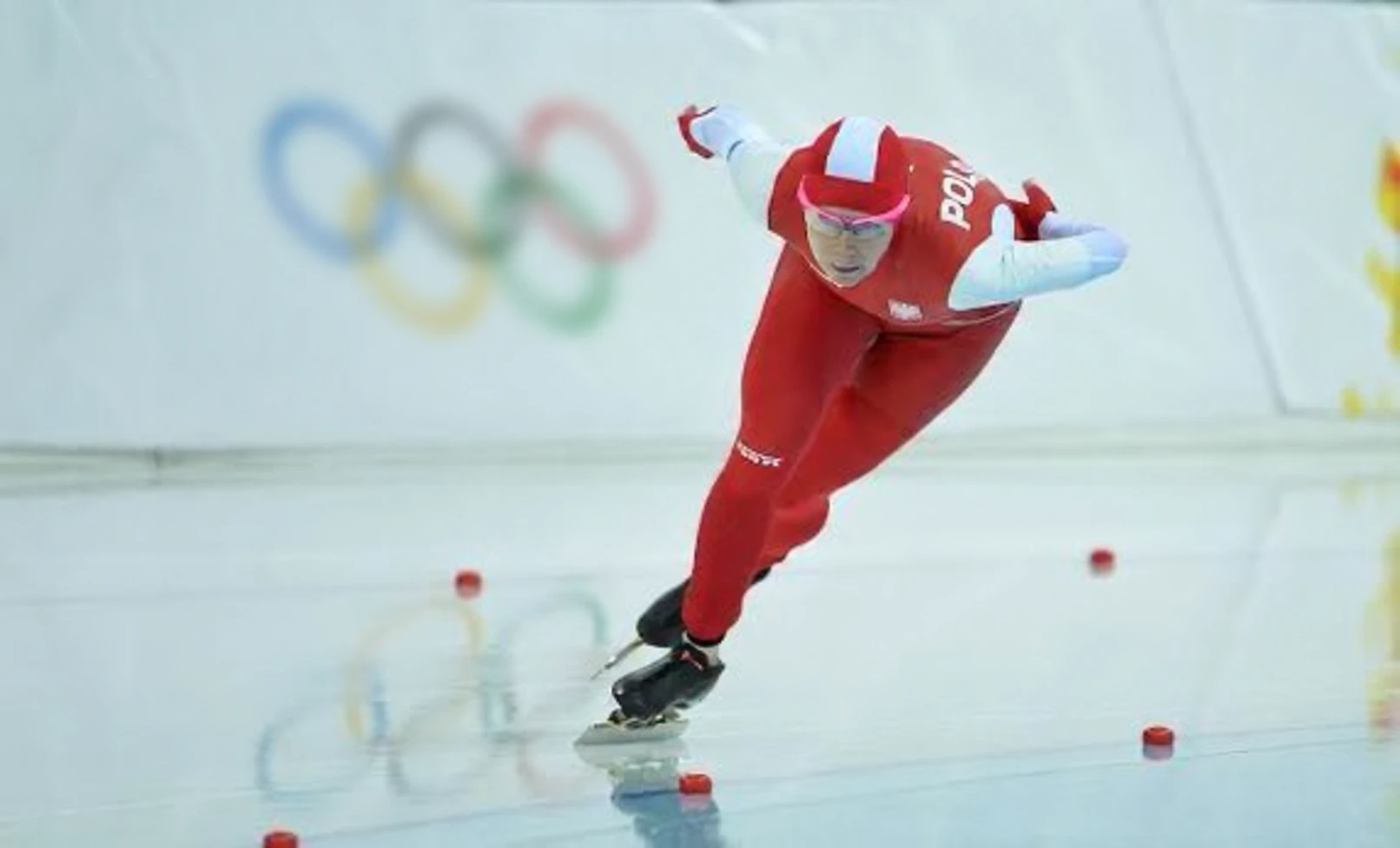
Photograph supplied for this article.
History does not end in the archive.
Maryna Gąsienica-Daniel reminds today’s spectators that Polish Alpine skiing can still come close to major honours. Sixth in giant slalom at the 2021 Cortina World Championships, eighth at Beijing 2022 and seventh at the Milano-Cortina 2026 Olympics, she has added new landmarks to the story. At the last of those Olympic races, thirteen hundredths of a second separated her from a medal.
Magdalena Łuczak represents another important path. Born in Łódź, she has combined international racing with American university sport. Representing the University of Colorado, she won individual NCAA titles in giant slalom in 2022, and in both slalom and giant slalom in 2024. Her development shows that Polish Alpine talent also grows beyond Podhale and can progress through different training systems.
Since Helena Marusarzówna’s era, skis, boots, course preparation and timing have changed. The tension before a start and the search for a personal racing line remain recognisable. Looking towards Kasprowy, it is worth seeing these people too: champions, brothers, sisters, parents and coaches. They make skiing history more than a table of results.
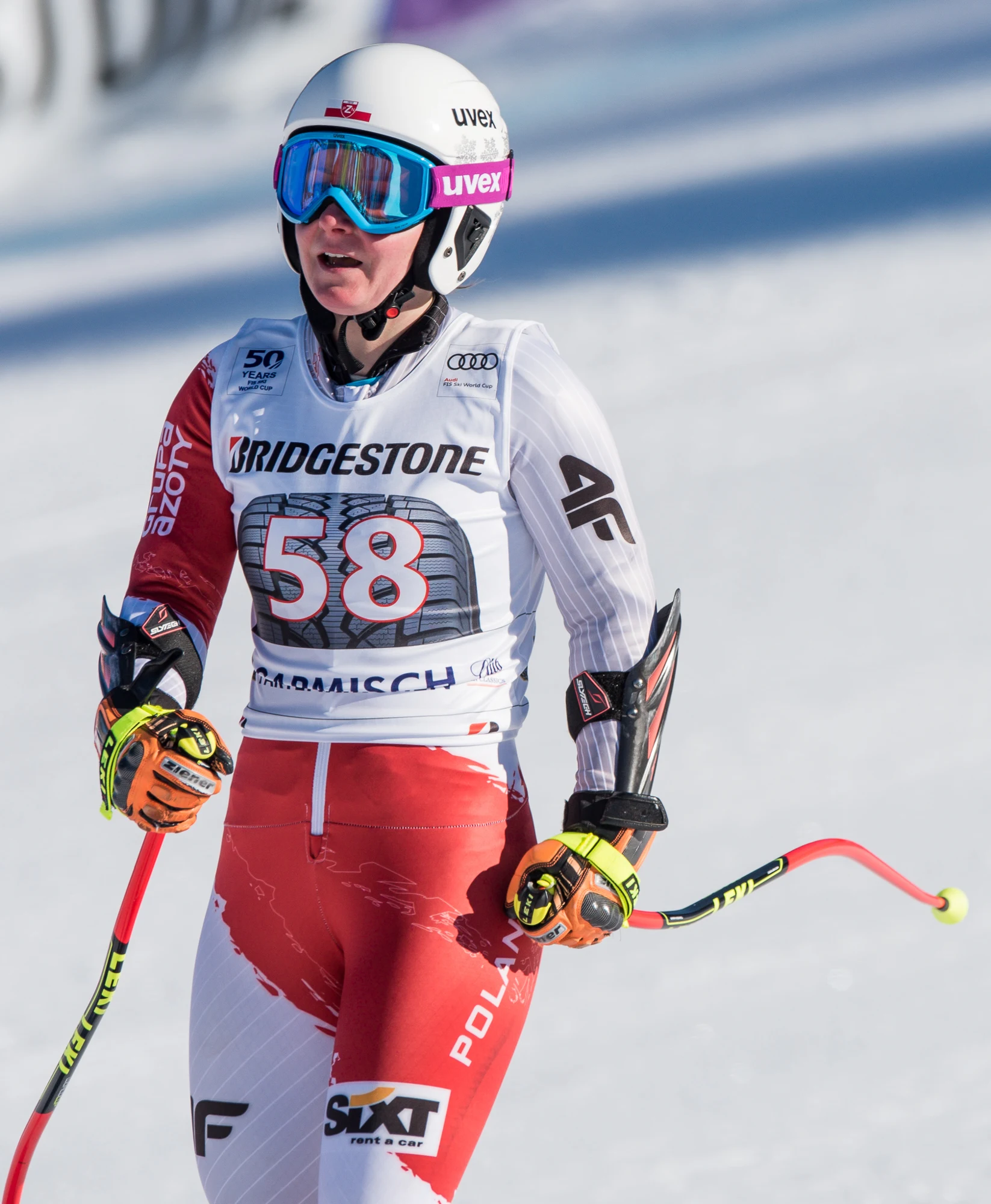
Foto: Stefan Brending (2eight) · CC BY-SA 3.0 DE · Source ↗
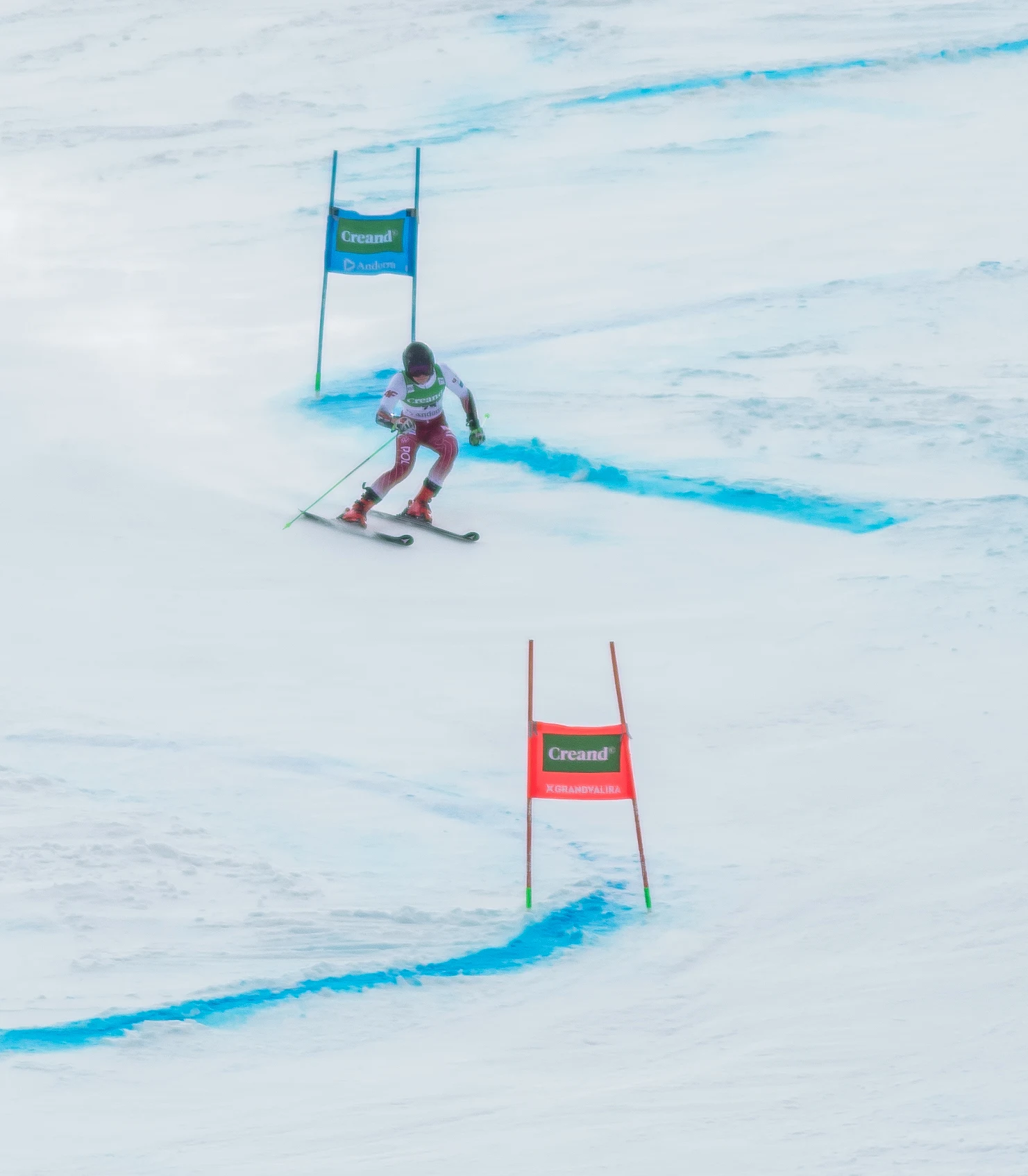
Tournasol7 / Krzysztof Golik · CC BY 4.0 · Source ↗
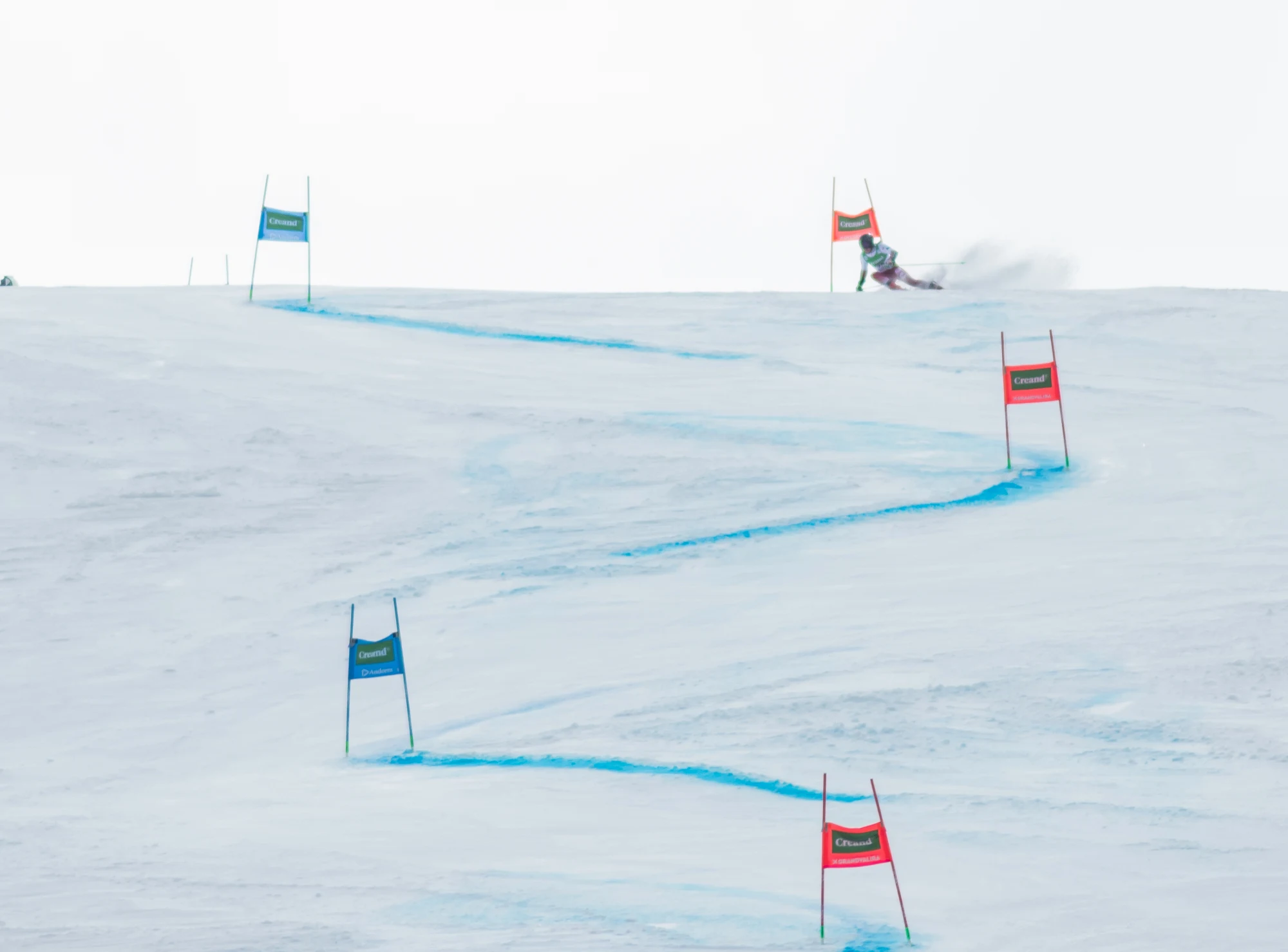
Tournasol7 / Krzysztof Golik · CC BY 4.0 · Source ↗
Moments that carry the story forward.
Helena Marusarzówna’s pre-war championship successes.
Grocholska, Kodelska and Kowalska at the Oslo Olympics.
Ałuś’s World Championship medals in combined.
Małgorzata’s Olympic result and Dorota’s World Cup victory.
Andrzej Bachleda-Curuś III finishes fifth in combined at Nagano.
Maryna Gąsienica-Daniel finishes seventh in the Olympic giant slalom.
From Kasprowy to the world.
Kuźnice and Kasprowy Wierch bring these stories together. The cable car changed Zakopane’s winter landscape, while athletes gave it meanings of their own. Visitors now come for a day on snow. Knowing the people who grew up beneath these mountains adds another dimension to that visit.
← THE BEGINNINGS OF POLISH SKIINGHistorical sources, results and photograph licences
An original historical introduction following selected people. Olympic, World Championship, World Cup and university results are distinguished throughout. Each photograph is captioned with its date and context.
- Helena Marusarzówna — IPN
- Helena Marusarzówna — PAP / dzieje.pl
- Barbara Grocholska-Kurkowiak — PKOl
- Teresa Kodelska-Łaszek — PKOl
- Maria Kowalska — PKOl
- Jan Gąsienica-Ciaptak — PKOl
- Jan i Maciej Gąsienica-Ciaptak — Wojciech Szatkowski / WATRA
- Andrzej Gąsienica-Roj — PKOl
- Stefan Dziedzic — PKOl
- Józef Marusarz — PKOl
- Andrzej Dereziński — PKOl
- Andrzej Bachleda-Curuś — PKOl
- Banff 1972 — oficjalne wyniki FIS / official FIS results
- Jan Bachleda-Curuś — PKOl
- Dorota Tlałka-Mogore — PKOl
- Małgorzata Tlałka-Mogore-Długosz — PKOl
- Madonna di Campiglio 1984 — FIS
- Andrzej Bachleda-Curuś III — PKOl
- Maryna Gąsienica-Daniel — PKOl
- Milano-Cortina 2026 — PKOl
- Magdalena Łuczak — University of Colorado Athletics
- Katarzyna Bachleda-Curuś — PKOl
- Katarzyna Bachleda-Curuś: „Po drugiej stronie barykady” — PKOl
Photographs have been resized and converted to WebP; the header display is fitted to the screen. The adapted files remain under the licences linked in their captions. Later portraits are not presented as photographs from the athlete’s racing years.
- Helena Marusarzówna.jpg — Autor nieznany / unknown photographer · IKC 1938; Public domain.
- Barbara Grocholska-Kurkowiak.jpg — Vojthas95; CC BY-SA 4.0.
- Andrzej Bachleda-Curuś.jpg — Sławek (Sławek Skonieczny); CC BY-SA 2.0.
- Andrzej Bachleda-Curuś III band.jpg — MSZ / Ministry of Foreign Affairs of Poland; CC BY 3.0 PL.
- 2017 Audi FIS Ski Weltcup Garmisch-Partenkirchen Damen – Maryna Gasienica-Daniel – by 2eight – 8SC0666.jpg — Foto: Stefan Brending (2eight); CC BY-SA 3.0 DE.
- Magdalena Luczak in Soldeu 2024 GS 2nd run (1).jpg — Tournasol7 / Krzysztof Golik; CC BY 4.0.
- Magdalena Luczak in Soldeu 2024 GS 2nd run (4).jpg — Tournasol7 / Krzysztof Golik; CC BY 4.0.
Additional images: the 1937 Kasprowy ski course — NAC / IKC, public domain; the upper station in 1958 — FOTO:FORTEPAN / Szent-tamási Mihály, CC BY-SA 3.0. Full source links accompany the images. Contemporary coverage is current to October 2026.
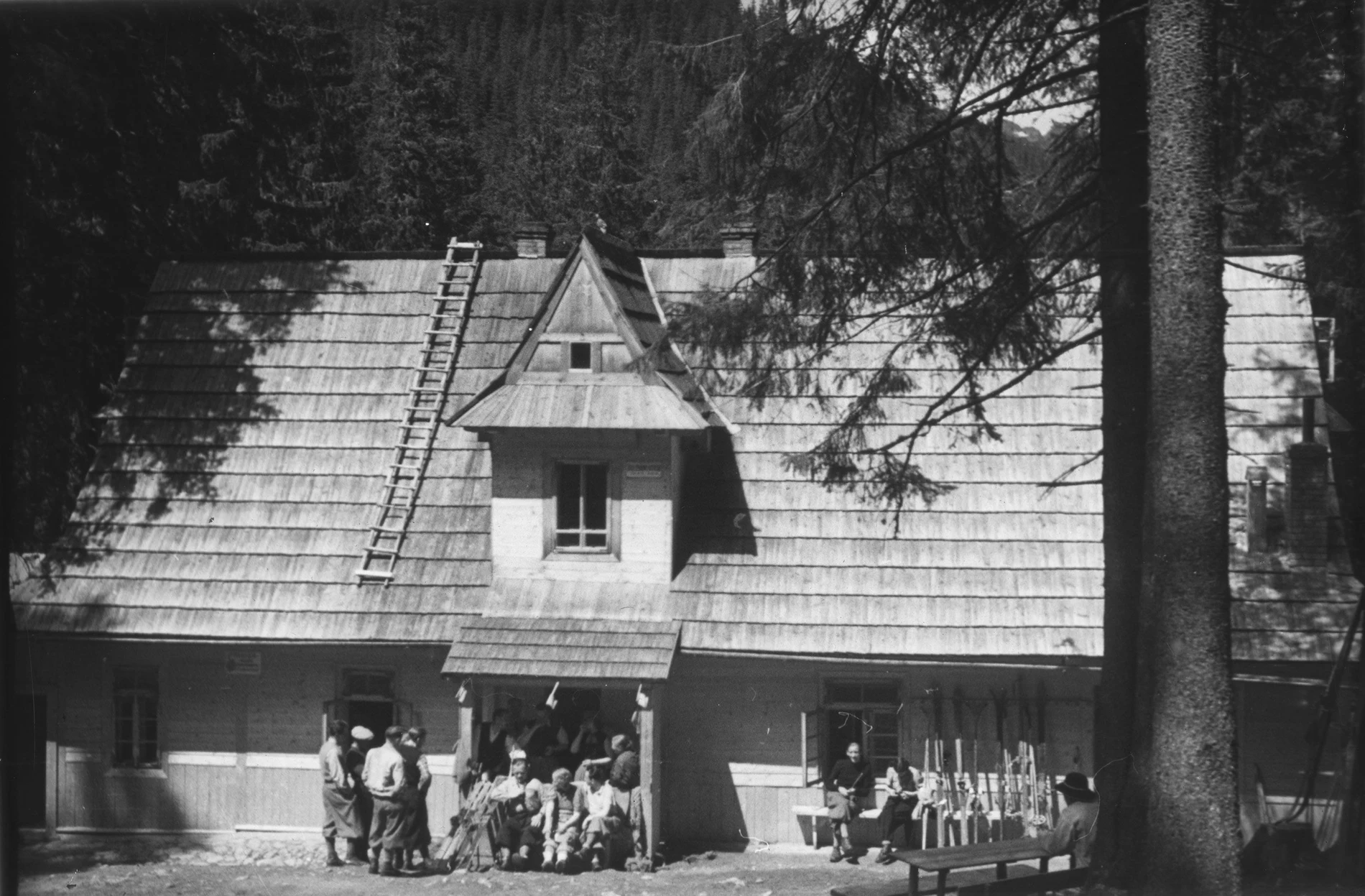
Józef Oppenheim / Muzeum Tatrzańskie · AFN_131_B · Public domain · archival record
Follow the early mountain tourers.
Mariusz Zaruski, Stanisław Zdyb, Józef Oppenheim and the people who explored the mountains on skis. A story of journeys, friendships and a hut that became a legend.
THE HISTORY OF SKI MOUNTAINEERING →Your own day on snow.
Choose equipment for your trip and add your own memories to winter beneath the Tatras.
EXPLORE THE RENTAL ↗