
The history of ski mountaineering in the Tatras
Mariusz Zaruski, Stanisław Zdyb, Józef Oppenheim and the people who explored the mountains on skis. A story of journeys, friendships and a hut that became a legend.
BEGIN THE STORY ↓Józef Oppenheim / Muzeum Tatrzańskie · AFN_131_B · public domain
Before comfortable rides to the summits, a skiing day began with the climb. The descent was one part of a much larger adventure.
After the story of racers and sporting families, we turn to another expression of the same passion. Here, a hundredth of a second did not decide the day. Space, endurance and good companions mattered. Today we might call it ski touring or ski mountaineering. The old Zakopane community had an affectionate Polish word for an ambitious mountain outing: wyrypa.
Zaruski. Winter becomes a way through the mountains.
In the winter of 1906, Mariusz Zaruski and his companions undertook a long ski journey from Zakopane through the Tatras and Orawa. Skis made it possible to connect valleys and cross passes, travelling far beyond the night’s shelter. Such journeys demanded endurance and an understanding of winter mountain conditions.
Zaruski was also a teacher and organiser. Ski courses passed experience on, including to local highlander guides. Exploration and responsibility for others meet in this story: the first head of TOPR, the Tatra mountain rescue service, helped shape both traditions.
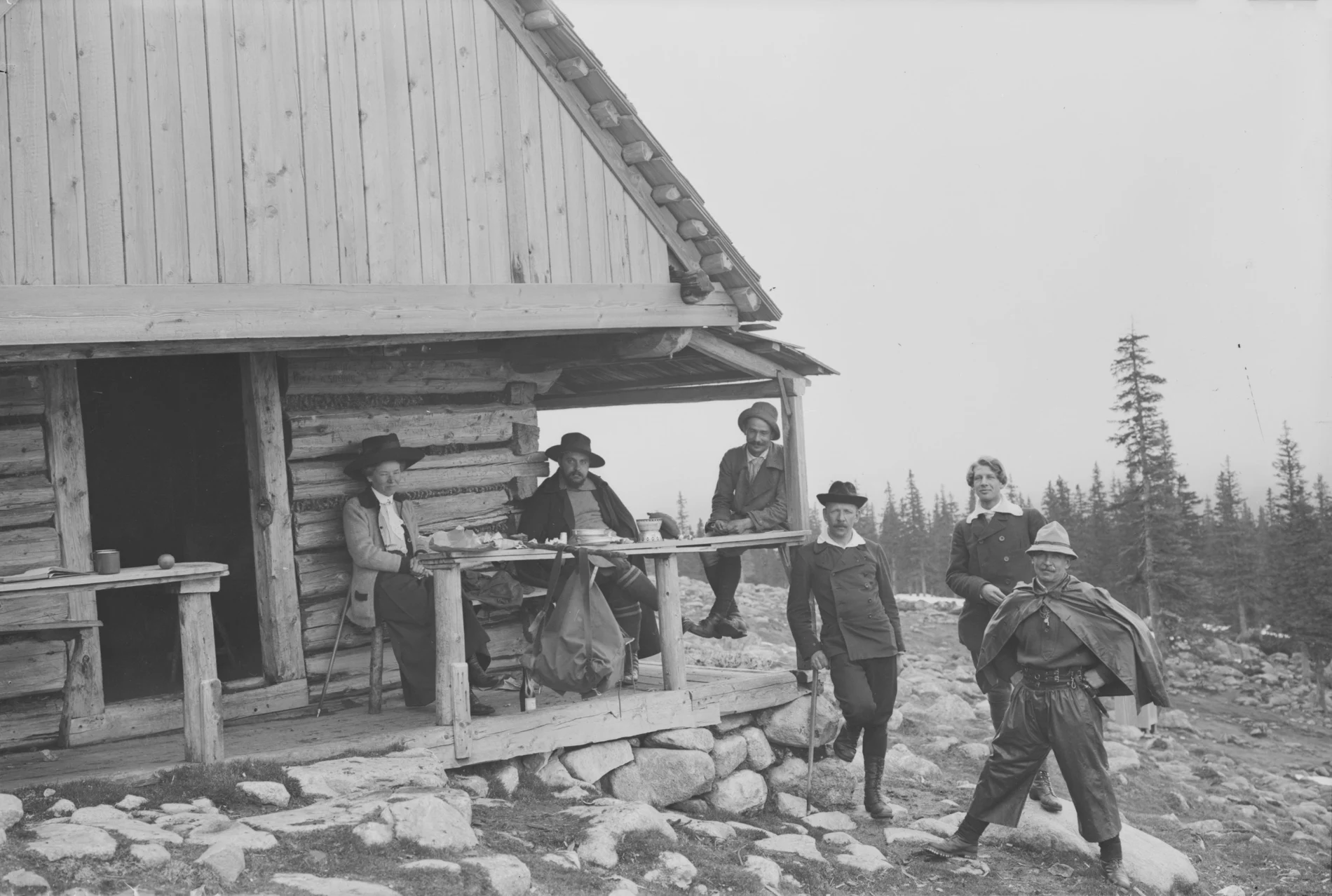
Józef Oppenheim / Muzeum Tatrzańskie, AFN_3428_2 · Public domain · archival record
Two men on Kościelec.
In March 1911, Zaruski and Stanisław Zdyb made their celebrated ski descent of Kościelec. Zaruski’s account in Na bezdrożach tatrzańskich conveys its seriousness: steep, hard snow, ice and intense concentration. It remains a defining episode in the pioneering history of Tatra ski mountaineering.
Both names deserve to be remembered. Beside Zaruski was Zdyb: skier, climber and mountain rescuer. His contribution should survive even a brief retelling. Behind historic achievements there was often a partnership — another person’s knowledge, presence and willingness to make decisions together.
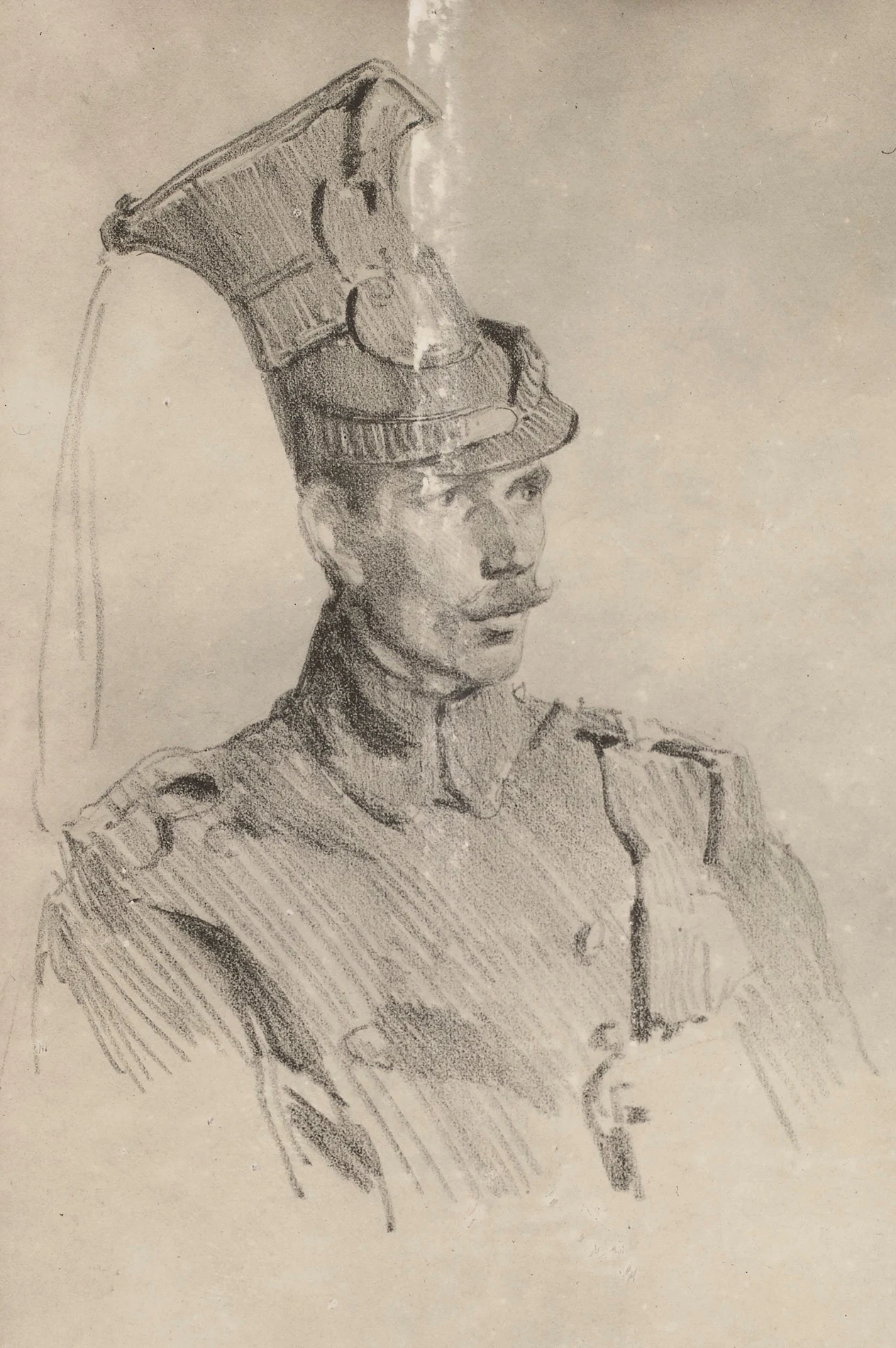
Antoni Pawlikowski / Biblioteka Narodowa · Polona · Public domain · archival record
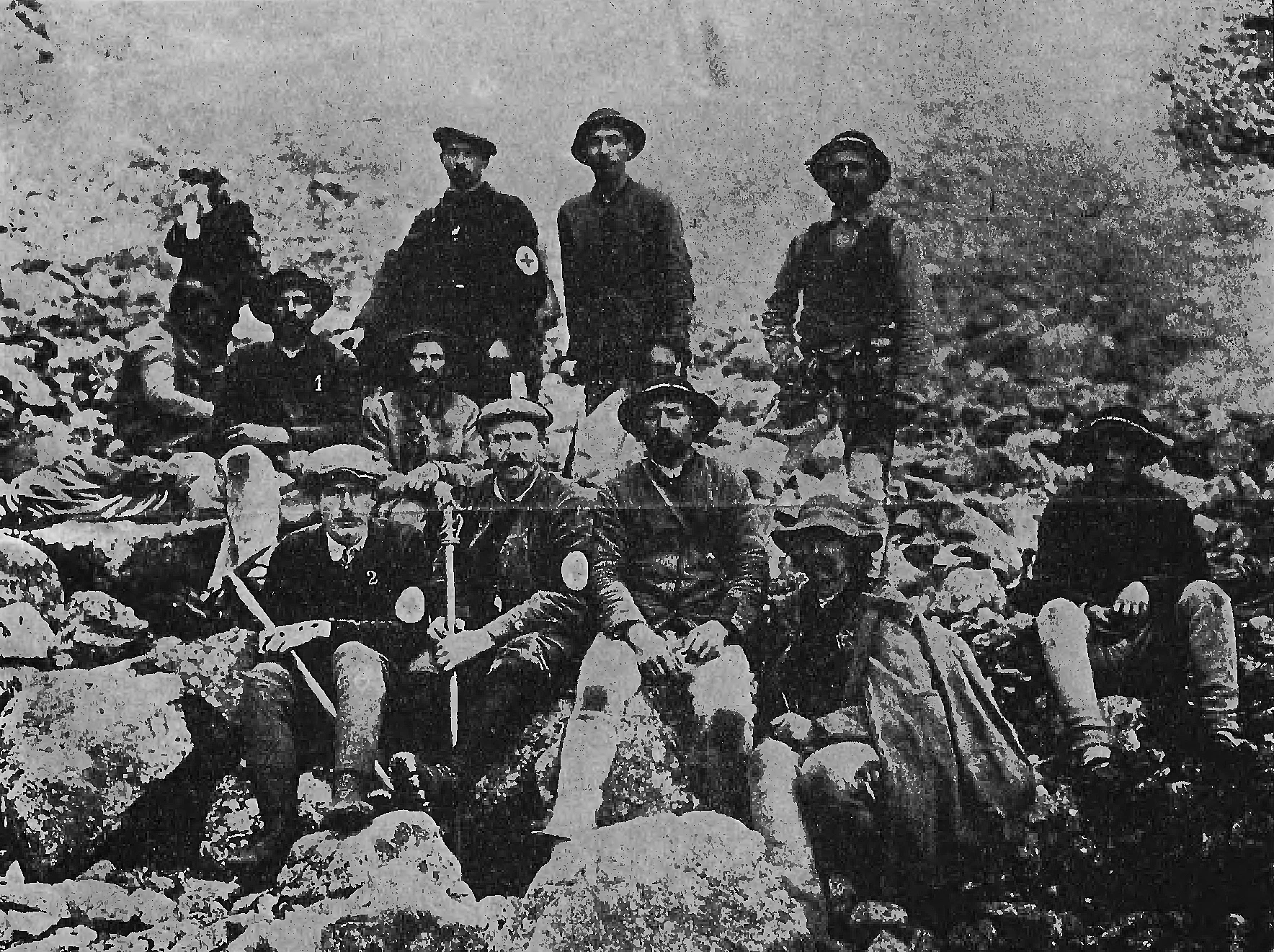
Archiwalna fotografia / Wikimedia Commons · Public domain · archival record
Equipment that changes the way we see.
Look closely at the children fastening their skis in Zakopane. Józef Oppenheim probably took the photograph between 1911 and 1914. There are wooden skis and single long poles. Soft boots, a free heel and the absence of metal edges gave the equipment very different capabilities from today’s skis.
This everyday scene also helps us understand the great mountain journeys. A descent belonged to an entire day’s effort; the height first had to be gained under one’s own power. Clothing, equipment and technique belonged to a world preserved for us on old negatives.
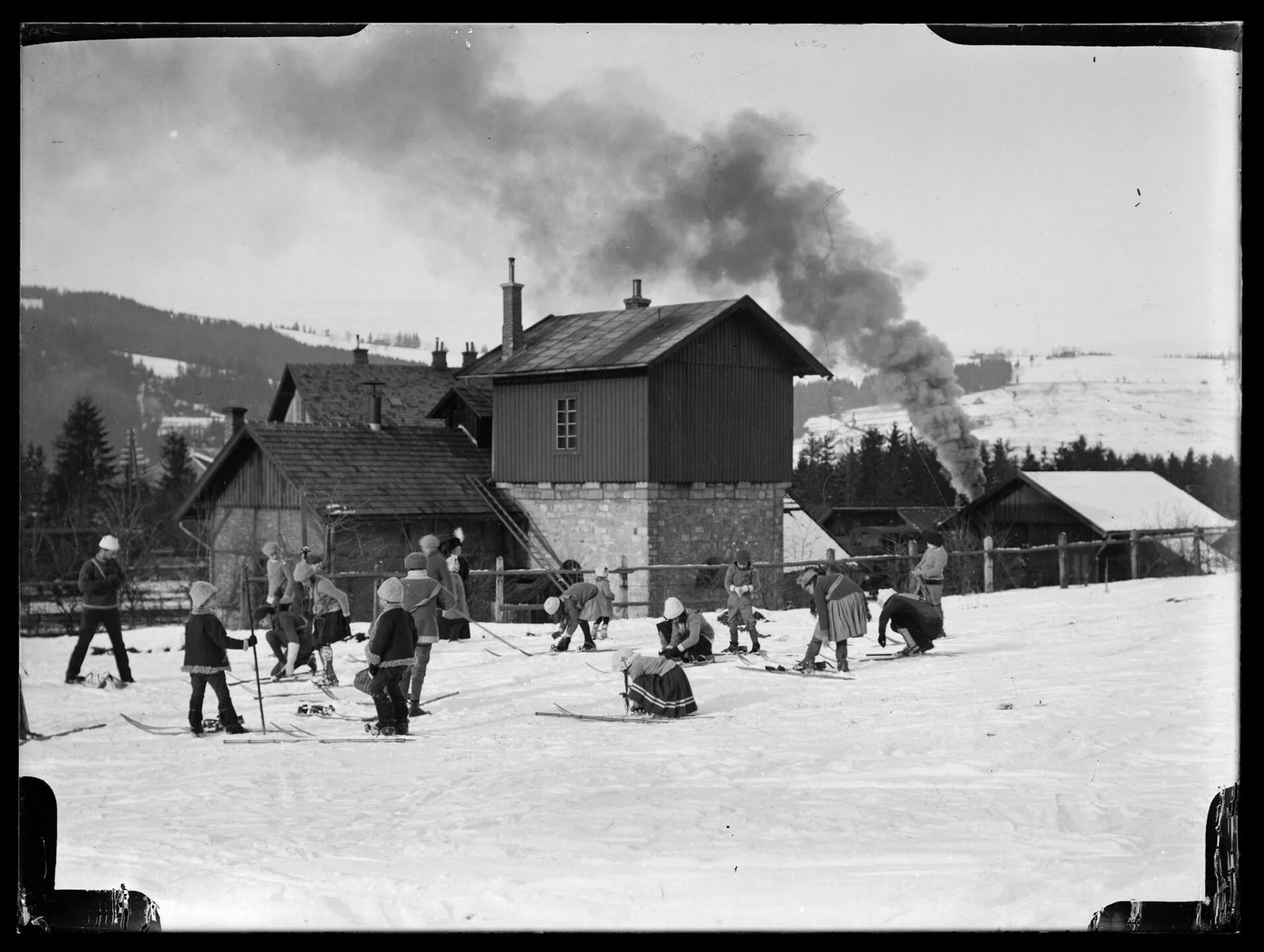
Józef Oppenheim / Muzeum Tatrzańskie · AFN III N 12 460 · Public domain · archival record
The hut where the company came together.
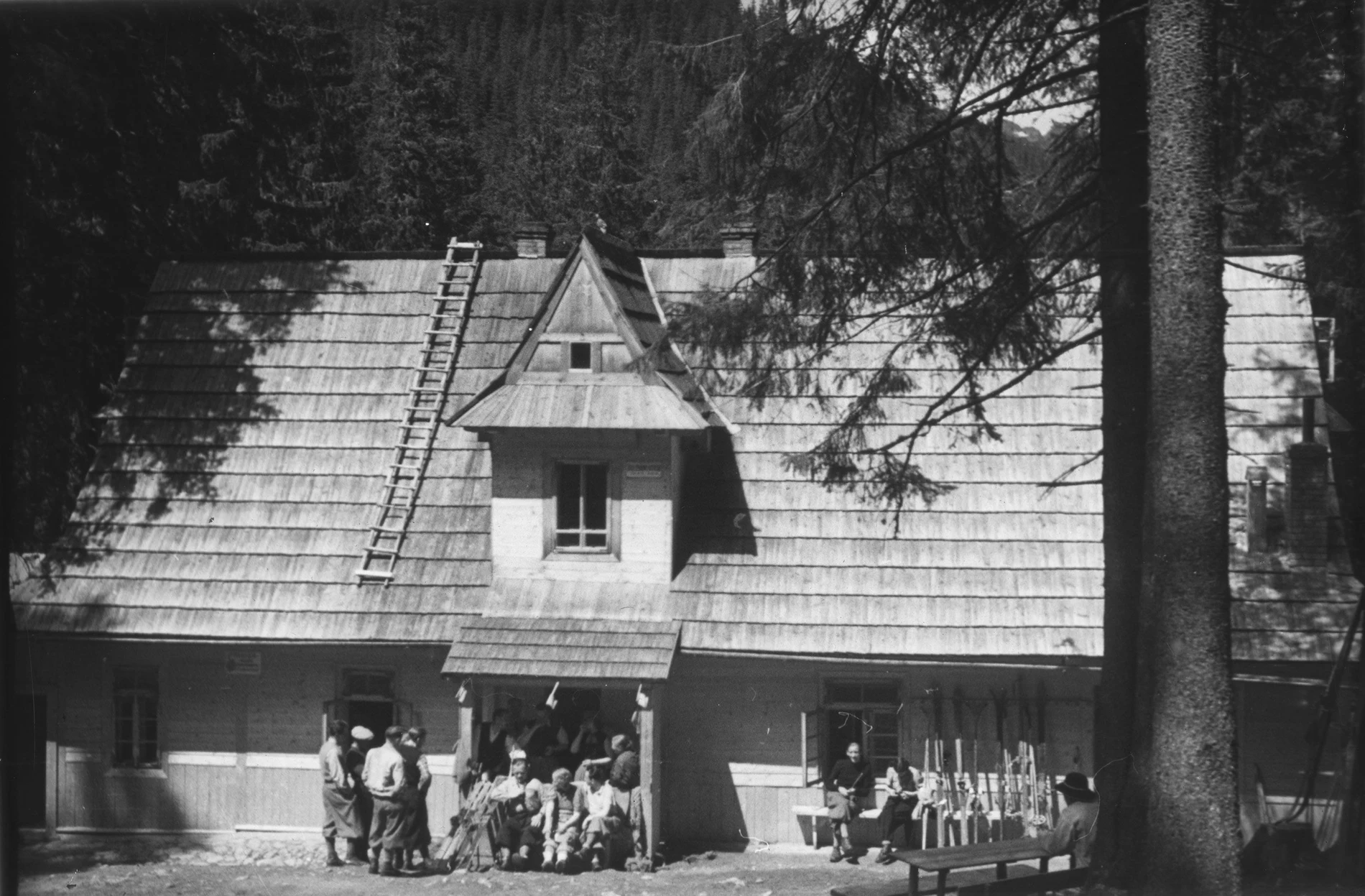
Pyszna began as an old shepherds’ hut that caught the skiers’ attention in 1908–1909. Conditions were basic: a stove, sleeping platforms and little space. Places like this supported the growth of winter touring. A hut offered something as valuable as a bed: somewhere to meet.
After reconstruction, it reopened on 13 September 1936, named after Władysław Strzelecki. There were now rooms for storing and drying ski equipment. The building changed, but Pyszna remained a shared address for several generations: veteran mountain tourers, racers and young people discovering their love of the Tatras.
A man who knew how to look.
Józef Oppenheim brought together ski touring, climbing, mountain rescue and photography. He joined TOPR in 1912 and took charge after Zaruski left in 1914. He led the service until 1939. Adventure in the mountains and readiness to help others were closely connected parts of his life.
His photographs reveal more than figures beneath summits: the proportions of a landscape, small mountain huts and people bound by a shared passion. Known as Opcio, he left both pictures and memories of a valued companion. Through these images, the old Tatras retain a human presence.
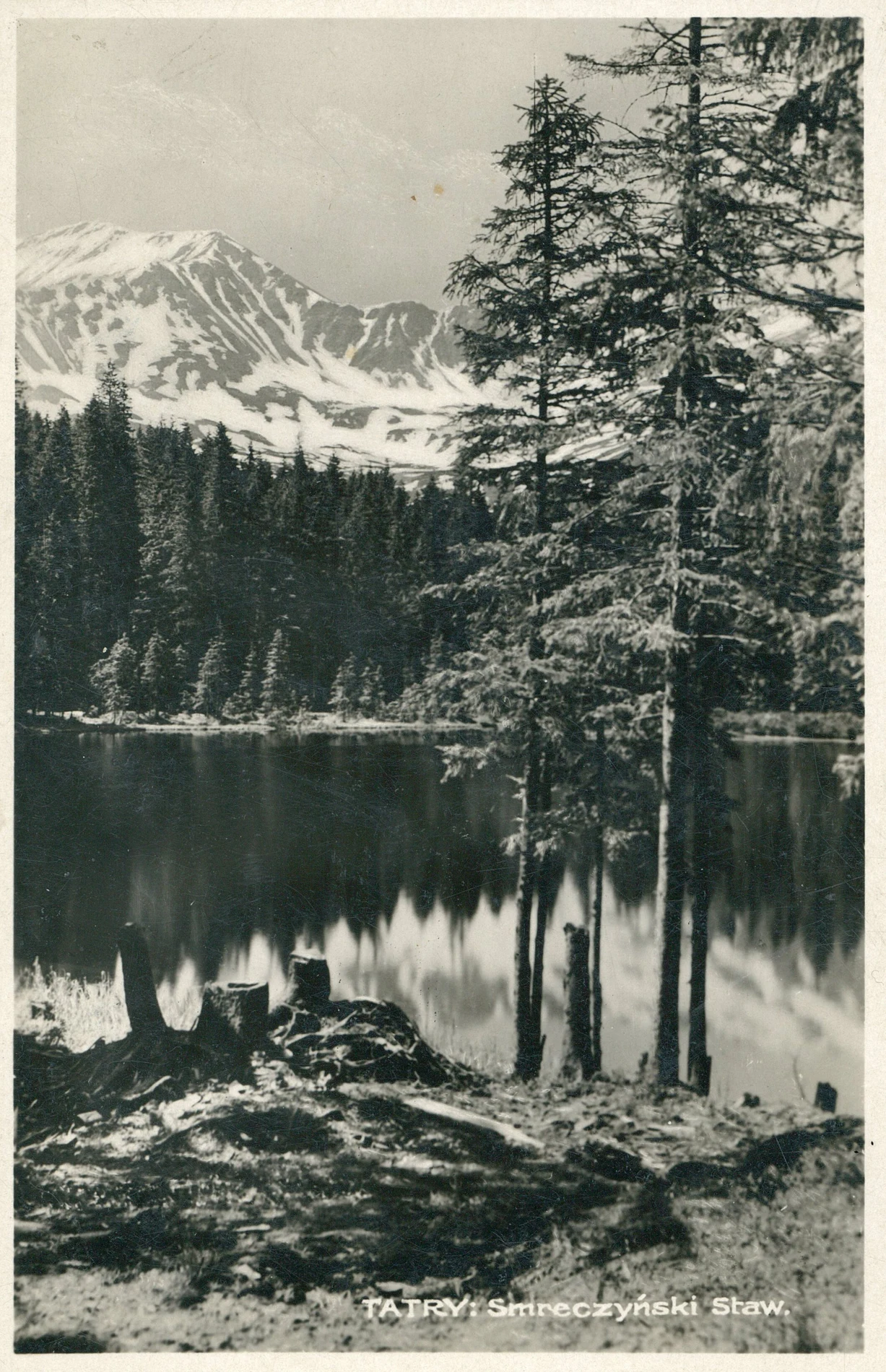
Józef Oppenheim / Biblioteka Narodowa · Polona · Public domain · archival record
To explore.
And to notice.
Oppenheim’s photographs also leave room for stillness, forest and water. Such an image helps explain a lifelong attachment to the mountains.
Fourteen hours remembered.
In 1926, Henryk Bednarski and Kazimierz Schiele completed a fourteen-hour ski journey linking the areas of Kasprowy Wierch, Morskie Oko and the Five Lakes Valley. Its scale says much about these skiers’ capabilities. They learnt the mountains through long traverses extending beyond a single valley.
Bednarski combined competition with climbing and ski touring. Such versatility runs through the biographies of early Zakopane skiers. A competition photograph from 1932 brings Bednarski, Schiele, Bronisław Czech and Franciszek Bujak into one frame — different expressions of a closely connected sporting community.
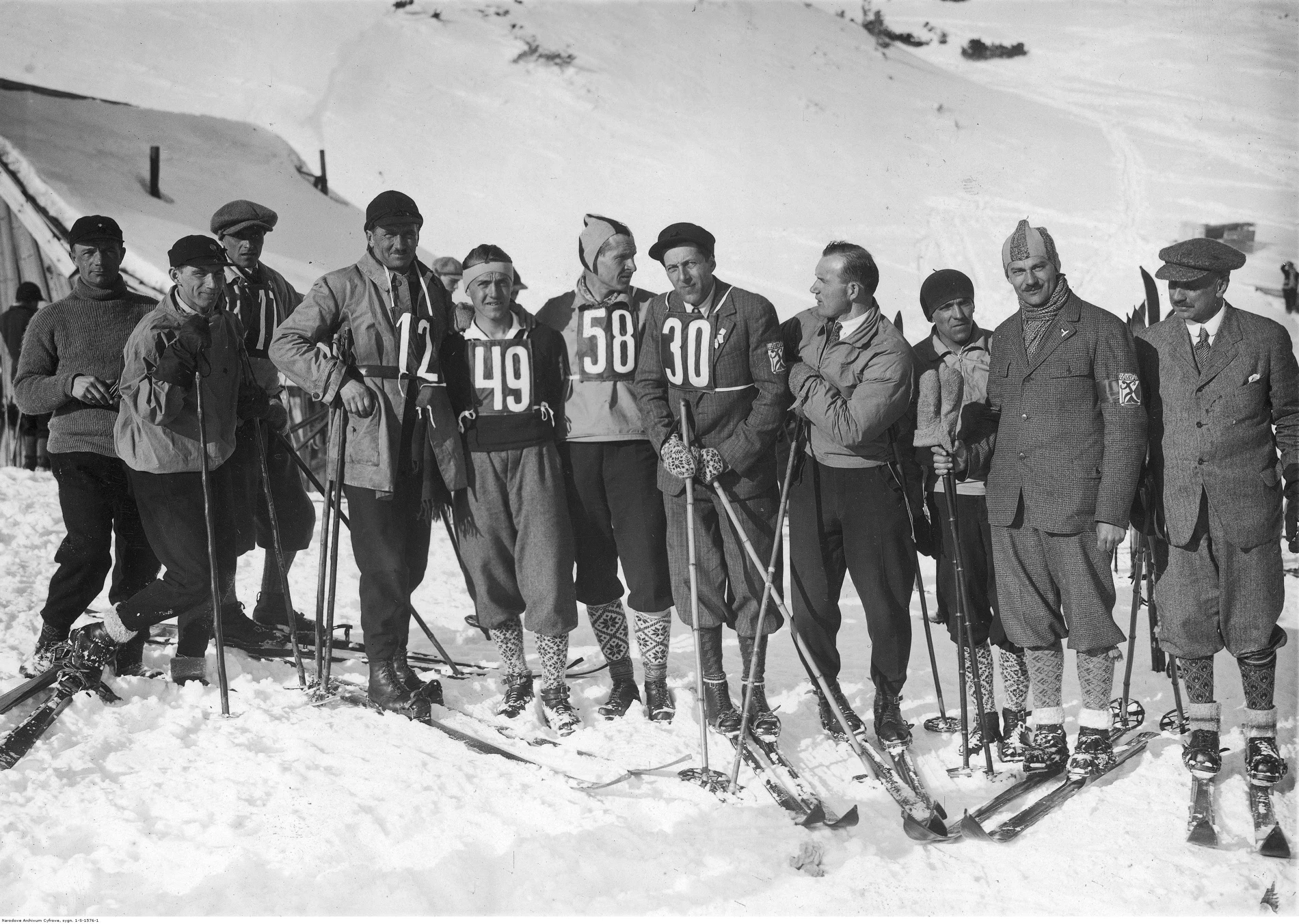
NAC / Koncern Ilustrowany Kurier Codzienny · 1-S-1576-1 · autor nieznany / unknown photographer · Public domain · archival record
Red-haired Wanda. Skis, art and memory.
Wanda Gentil-Tippenhauer, nicknamed Ruda — the red-haired one — was born in Haiti in 1899 and made Zakopane a central part of her life. An artist and ski tourer, she connected mountain experience with painting and writing. She drew diagrams of eleven ski routes for Oppenheim’s 1936 guide; her illustrations also appeared in a later guide by Tadeusz Zwoliński.
Women also took part in the great mountain journeys. Wanda Dubieńska and Elżbieta Ziętkiewiczowa joined a five-day tour in 1922. They helped make this history, and their names belong in its telling.
Ruda Wanda also helped preserve the memory of this world. Her perspective leads from the landscape to the people: their passions, friendships and the place to which they returned.

Tomasz Piskorski / Wikimedia Commons · Public domain · archival record
Experience gathered in a small book.
The Polish Ski Association published Józef Oppenheim’s Szlaki narciarskie Tatr Polskich i główne przejścia na południową stronę in 1936 — a guide to Polish Tatra ski routes and crossings to the southern side. Its title page credits Wanda Gentil-Tippenhauer for the drawings. This modest document brings mountain practice and the art of explaining terrain together.
In the opening chapters, Oppenheim explained that a winter route was not simply a summer path covered in snow. Gradient, aspect and snow conditions transformed its character. He emphasised independent judgement, observation and understanding the ground. Behind the route descriptions lay something broader than a list of summits.
We show the title page as a document of its time. An old guide introduces its author’s thinking, language and the geography of skiing ambitions in the 1930s. Reading that history and planning a present-day mountain outing are separate undertakings.
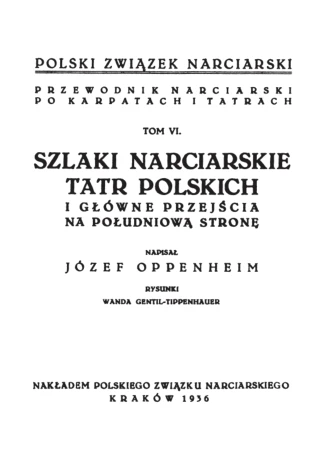
Józef Oppenheim / Polski Związek Narciarski · 1936 · skan karty tytułowej / scanned title page · Public domain — title page · archival record
The building disappeared. The story remained.
The Pyszna hut did not survive the war. Photographs, records and the memories of its community remained. Published in 1961, Wanda Gentil-Tippenhauer and Stanisław Zieliński’s W stronę Pysznej brought that world back to readers: the skiing company, old mountain journeys and Józef Oppenheim.
Reaching a summit is only part of this history. Returning, meeting friends and remembering companions matter too. That is why there is room beside the famous names for huts, equipment and everyday photographs. Together, they tell a fuller story of winter in the Tatras.
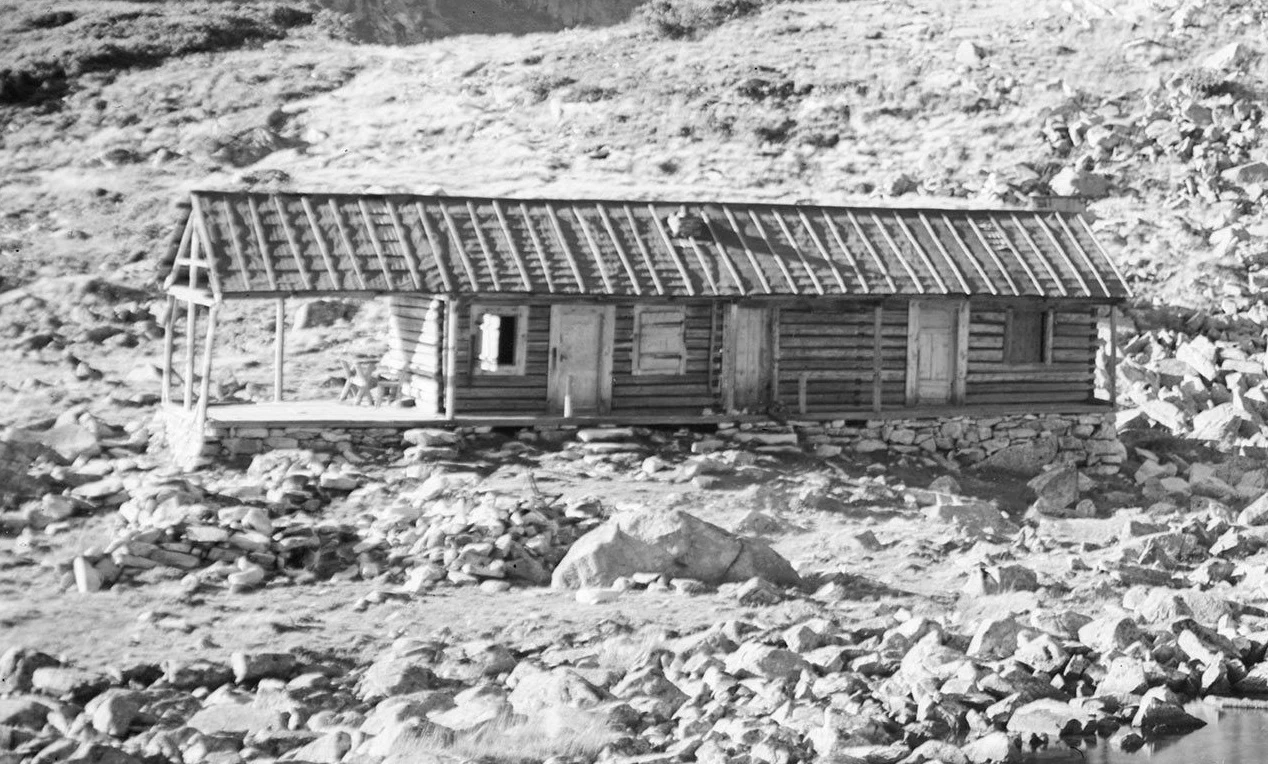
Józef Oppenheim / Muzeum Tatrzańskie · AFN_167_B · CC BY-SA 4.0 · archival record
Four dates. One mountain passion.
Zaruski’s early long-distance tours
Zaruski and Zdyb on Kościelec
Oppenheim’s ski guide
W stronę Pysznej is published
Sources, photographs and documents
This story draws on Tatra Museum publications and Oppenheim’s original 1936 guide. It does not invent dialogue or statements by historical figures.
- Mariusz Zaruski — Muzeum Tatrzańskie
- Kościelec — Muzeum Tatrzańskie
- Historia jednego zdjęcia: Nartnicy — Muzeum Tatrzańskie
- Schronisko na Pysznej — Muzeum Tatrzańskie
- Józef Oppenheim — Muzeum Tatrzańskie
- Henryk Bednarski — Muzeum Tatrzańskie
- Ruda Wanda — Muzeum Tatrzańskie
- Wyrypa z 1922 roku — Muzeum Tatrzańskie
- J. Oppenheim, Szlaki narciarskie Tatr Polskich…, 1936 — skan wydania / original edition
- Wokół książki W stronę Pysznej — Muzeum Tatrzańskie
Photographs and the portrait were resized and converted to WebP. The title page comes from a scan of the original edition; Wanda Gentil-Tippenhauer’s route diagrams are not reproduced. The header image is cropped responsively. The Five Lakes hut image remains available under CC BY-SA 4.0. Each illustration includes its author, collection, date, licence and archival link. Wanda’s small portrait retains its original dimensions. Captions distinguish the events described from the context shown.
Discover another side of skiing history.
From Helena Marusarzówna to the Bachleda-Curuś family: people who wrote their own chapters in Polish sport.
THE HISTORY OF ALPINE SKIING →