
227 days.
The story of the
Kasprowy cable car.
Before the first passengers arrived, people climbed into the mountains with tools and building materials. Return to 1935 and discover how a symbol of Zakopane took shape.
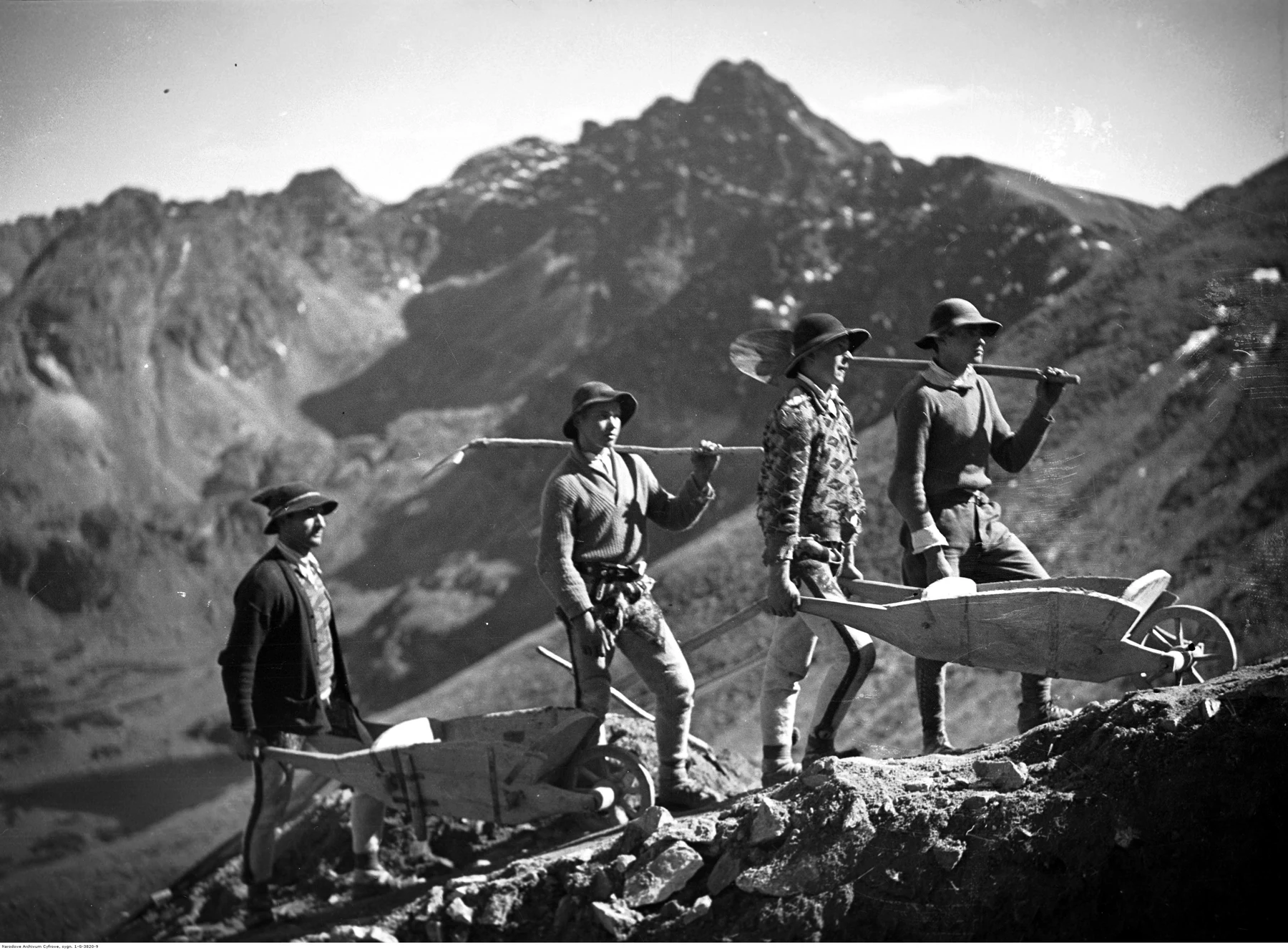
In the old photograph there are no tourists and no queue for a cabin. There are four men, wooden wheelbarrows and the Tatras. It is a fitting place to begin the story of the Kasprowy Wierch cableway.
Today the journey starts with a ticket and a step into a cabin. In 1935 it started with a question: how could everything needed for a cableway be delivered high into the mountains? Archive photographs make the answer tangible — the people’s faces, the weight of components and the terrain where they worked.
First came skis. And the climb.
Skiing in the Tatras began long before the cableway. In 1894, Stanisław Barabasz and Jan Fischer travelled on skis to Czarny Staw Gąsienicowy and descended to Kuźnice. Their journey is remembered among the pioneering episodes of Polish skiing, in mountains without today’s infrastructure.
This is an essential starting point: skis were also a way of travelling through the mountains. Modern ski touring carries a related idea — climb under your own power, then ski down. The cableway would transform access to high slopes, but it did not create the enthusiasm for skiing. That was here already.
An ambitious plan for a skiing town
Survey work for the future route began in 1934. The following summer the project gained momentum: on 24 July 1935, a company was established to build and operate a cableway between Kuźnice and Kasprowy Wierch. Its timetable was measured in months rather than years.
The leading advocate was Aleksander Bobkowski, president of the Polish Ski Association and deputy minister of transport. Anna and Aleksander Kodelski designed the station buildings. Sport, engineering and architecture came together in the project, against the background of preparations for the 1939 FIS World Championships in Zakopane.
There was opposition too. Conservationists protested against development in the Tatras. That debate belongs in the story: from the beginning, the promise of easier access was accompanied by a question about how much people should change the mountains.
Narodowe Archiwum Cyfrowe · autor nieznany / unknown photographer · domena publiczna / public domain · archive record
Before the cabins travelled, people carried
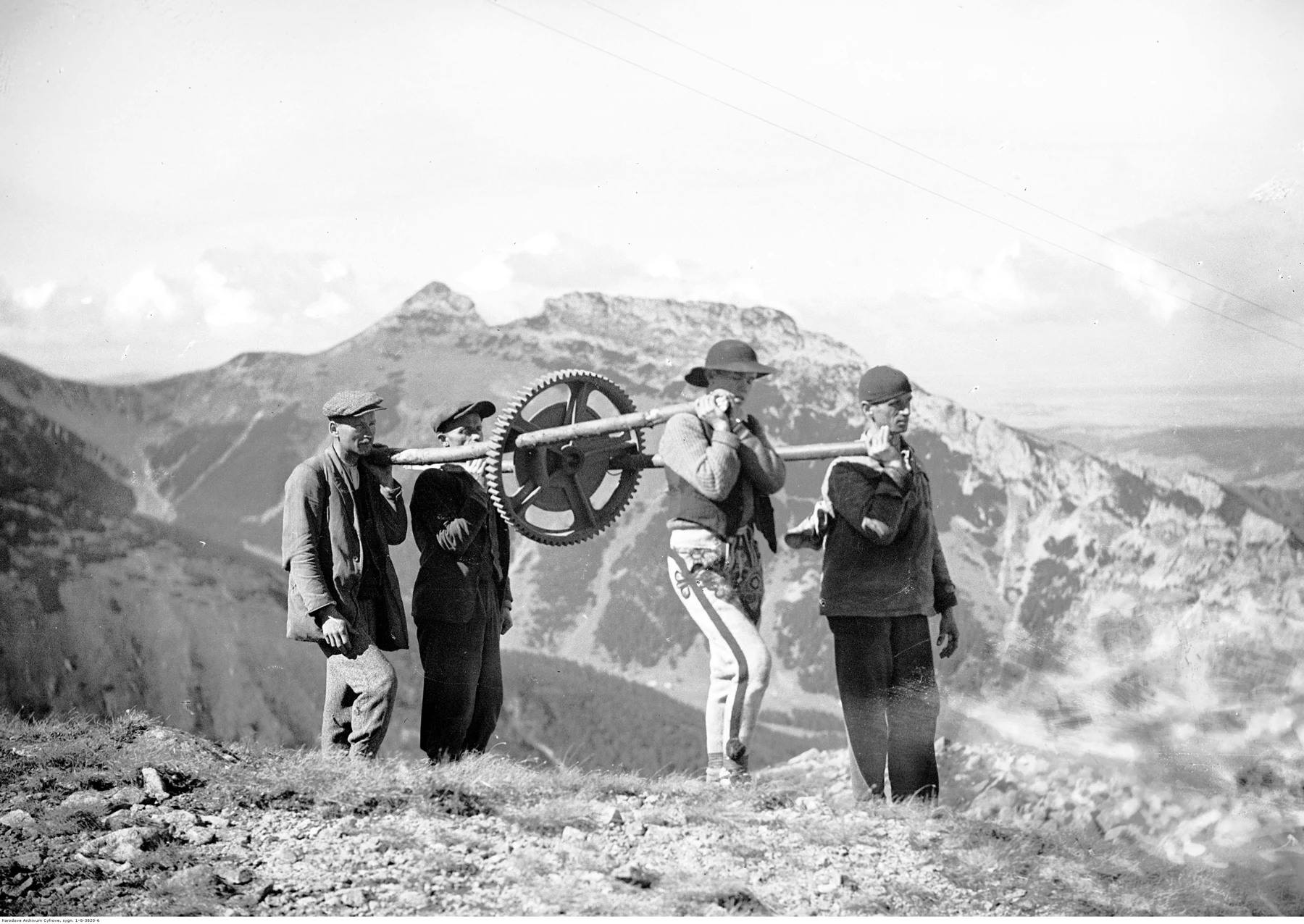
Work on the ground began on 1 August 1935. A road to Myślenickie Turnie had to be prepared, and deliveries organised beyond the reach of ordinary vehicles. Building materials passed through a sequence of transport stages: lorries, horse-drawn wagons and, high on the mountain, the backs of workers.
Look at the photograph of a gear wheel being carried. People are moving a machine component through an open, rocky landscape. That single frame makes the challenge tangible. Before machinery could help move materials, its own parts had to reach their destination.
Another photograph shows highlanders carrying wooden wheelbarrows and tools. This is not yet a tourist attraction. It is a record of work: building materials, uneven ground and people without whom the project would have remained a drawing.
Narodowe Archiwum Cyfrowe · autor nieznany / unknown photographer · domena publiczna / public domain · archive record
Construction could not wait for spring
On a summer visit, it is easy to forget how short a building season can be high in the Tatras. PKL’s account records snow arriving in September. Work continued in shifts, with almost a thousand people employed on the project. Skill had to be matched by endurance in cold, wind and exhausting conditions.
Historian Wojciech Szatkowski describes a protective wooden enclosure, known as a cieplak, which allowed masonry work to continue in freezing weather. A temporary construction cableway was also used to transport supplies. Passenger cabins came at the end of a chain of earlier solutions: roads, temporary structures, deliveries and protection from the weather.
The figure of 227 days therefore means more than speed. It spans the change from a summer construction site to work in winter conditions, with the same deadline ahead.
The beginning of a new chapter
The lower section from Kuźnice to Myślenickie Turnie opened on 26 February 1936. On 15 March, the first cabin reached Kasprowy Wierch, 227 days after work began. The cableway would become one of the most recognisable features of Zakopane.
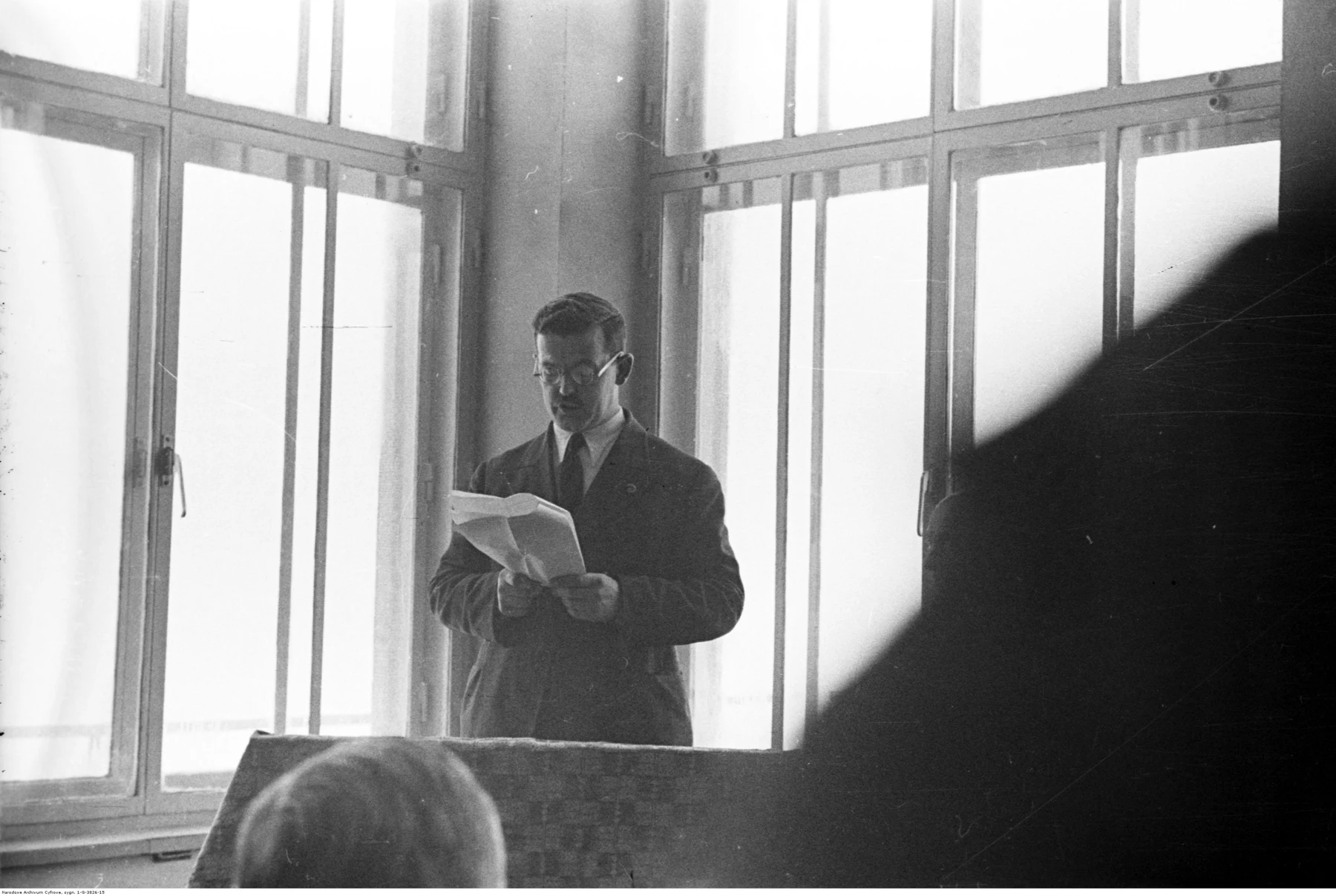
The opening photograph shows Aleksander Kodelski speaking. Here there is an interior, windows and light, in place of wheelbarrows and components carried through the mountains. Seen together, the photographs bring the construction story full circle: the design had become a real building, and passengers were entering the spaces created by the workers.
Narodowe Archiwum Cyfrowe · domena publiczna / public domain · archive record
Higher slopes became easier to reach
The cableway made high skiing terrain more accessible. A further step came in 1938 with a sled lift in the Gąsienicowa basin. Instead of chairs, it used large sleds hauled by a cable. What seems unusual today was part of the evolution of ski infrastructure.
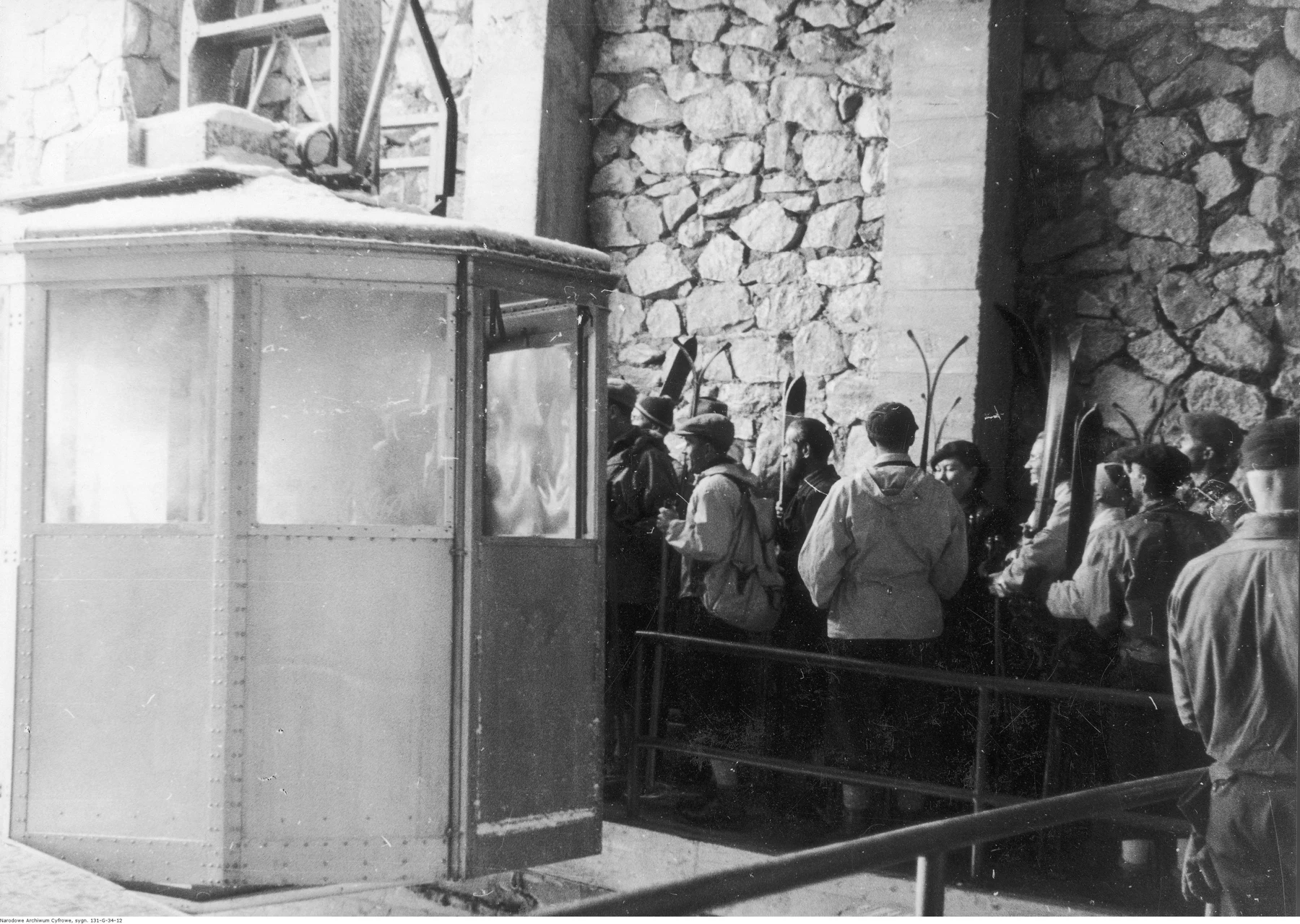
Henryk Poddębski’s archive photograph shows a cabin and people waiting at Kuźnice. Notice the shape of the cabin, the station entrance and the passengers’ clothes. Such details make the distance between the early cableway and a present-day visit immediately visible.
The photograph of the forecourt in 1939 offers a wider view. The lower station is now part of Kuźnice, with everyday activity in front of it. A major engineering project had become part of the ordinary landscape of the place.
Henryk Poddębski / Narodowe Archiwum Cyfrowe · 131-G-34-12 · domena publiczna / public domain · archive record
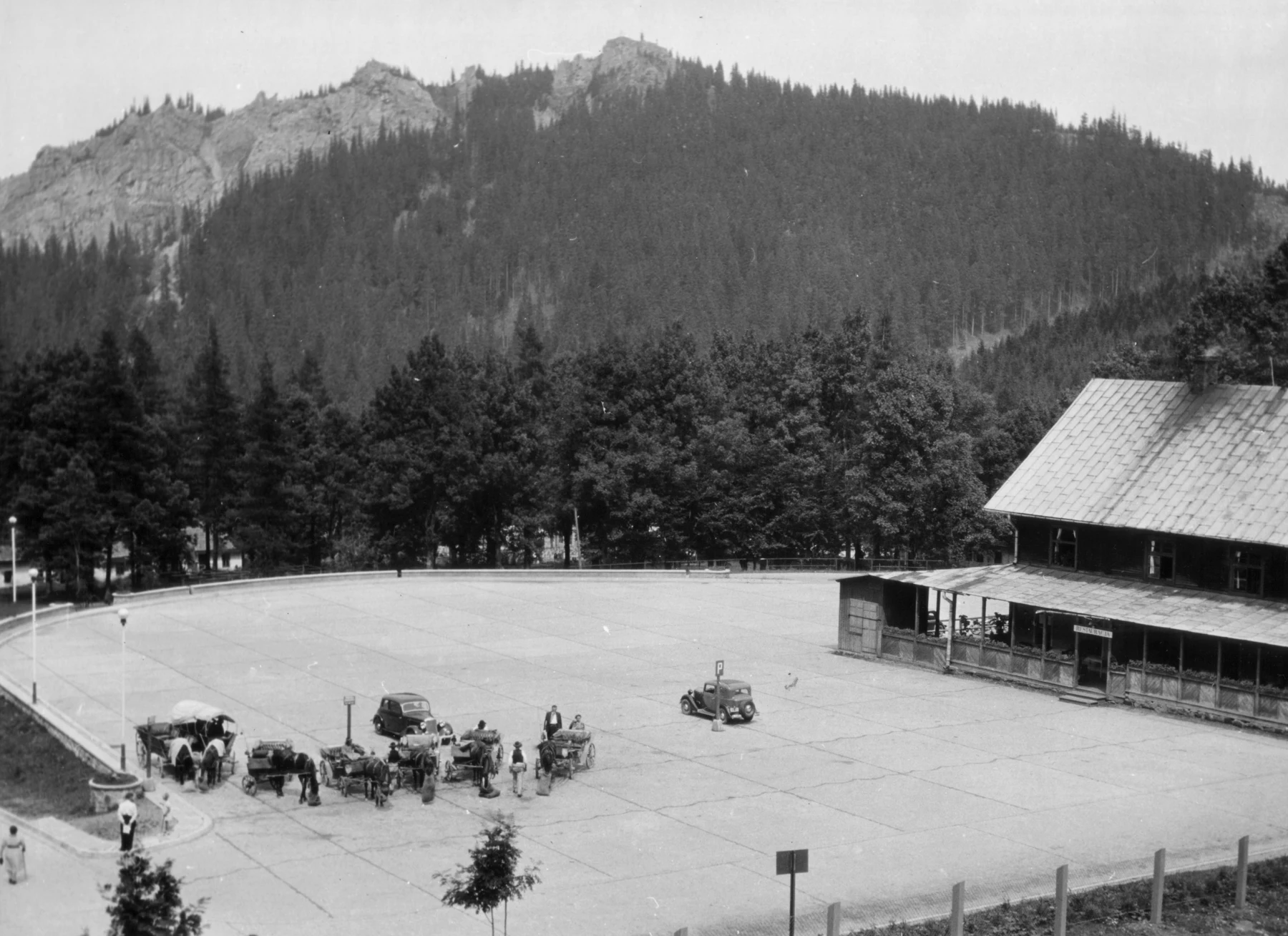
FOTO:FORTEPAN / MZSL/Ofner Károly · 28744 · CC BY-SA 3.0 · archive record · CC BY-SA 3.0
The same mountains, another chapter
The story did not end with the pre-war opening. The two photographs below come from the post-war period: a winter view dated 1950–1951 and a cabin at the upper station in 1958. These dates are kept separate from the construction years because each image records its own moment.
Snow-covered trees, cables above a slope and a cabin suspended against the valley show why the cableway became more than transport. The ride itself became part of people’s mountain memories. Passengers and equipment changed, but the encounter with the landscape remains recognisable.
A modernised cableway entered service in December 2007, adding another chapter to a story that began in the summer of 1935.
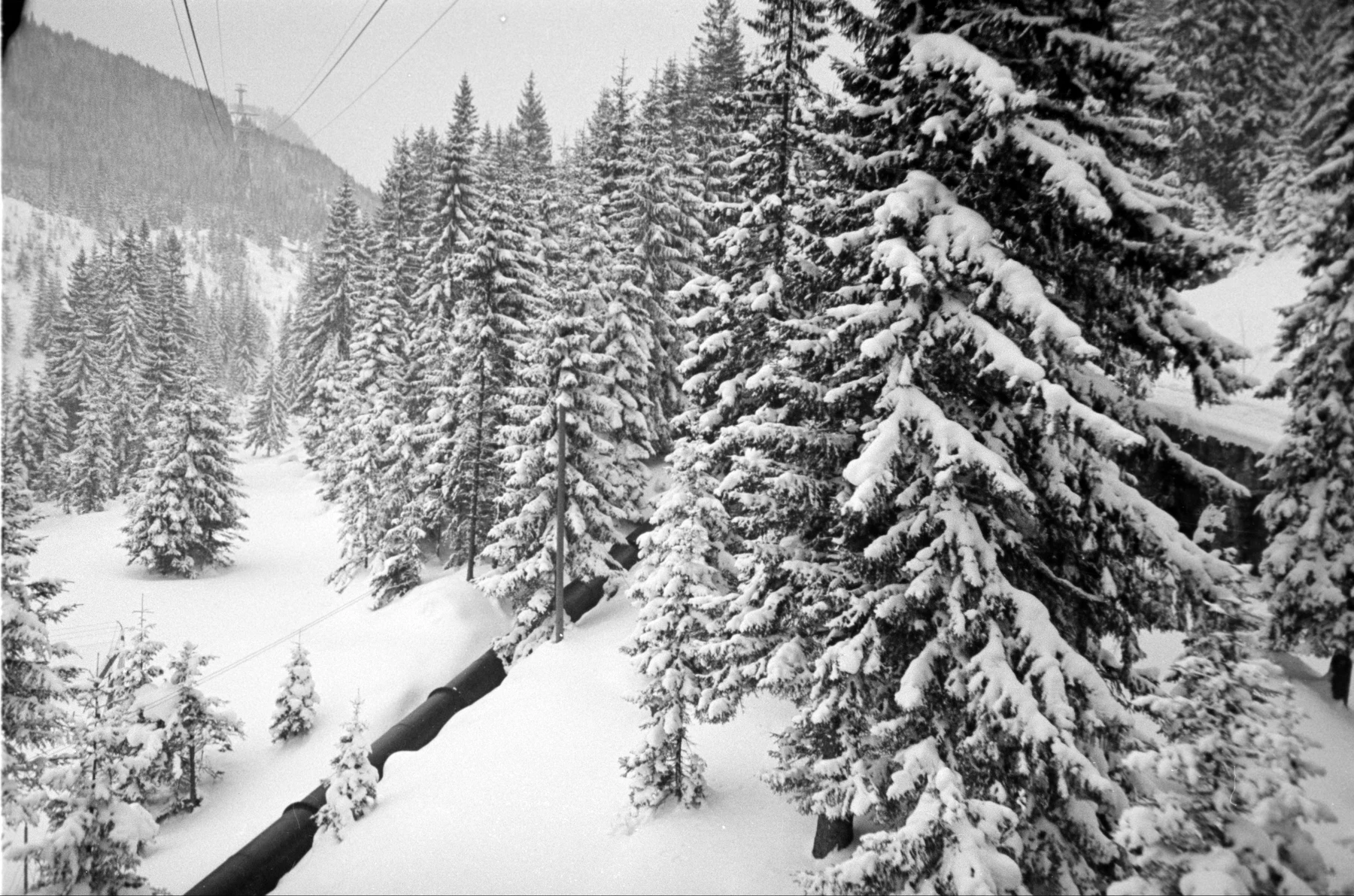
Wojskowa Agencja Fotograficzna / Narodowe Archiwum Cyfrowe · 3/39/0/-/7358-2 · domena publiczna / public domain · archive record
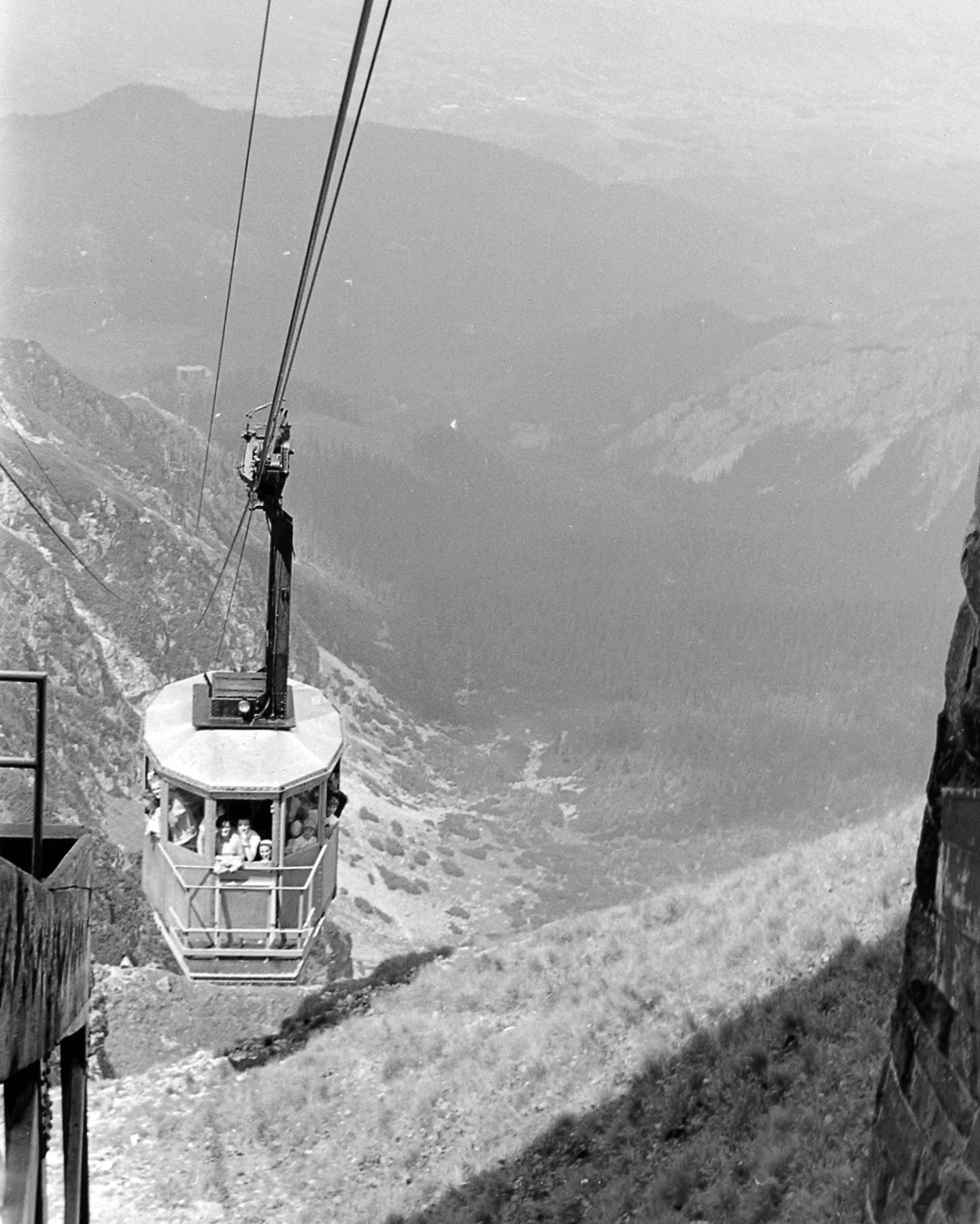
FOTO:FORTEPAN / Szent-tamási Mihály · 9651 · CC BY-SA 3.0 · archive record · CC BY-SA 3.0
From the decision to the first ascent
The company responsible for building and operating the cableway is established.
Construction work begins on the ground.
The lower section opens: Kuźnice to Myślenickie Turnie.
The first cabin reaches Kasprowy Wierch.
Your own story
starts in Kuźnice.
Before your next ride, look at the station and cabin with this story in mind. Behind today’s journey are many people’s work and nine decades of mountain memories. Mountain Explorers / ME Rent is nearby at Kuźnice 9. If you are planning a day on skis or a mountain outing, explore our equipment and available dates.
EXPLORE EQUIPMENT & DATES ↗Historical sources and photograph credits
An editorial account by Mountain Explorers / ME Rent. Photograph dates follow their archive records. Images have not been colourised; smaller files were prepared for the web. The cover is displayed with a layout crop.
- Zakopane.pl — Kolej linowa Kasprowy Wierch
- PKL — Historia i kalendarium
- PKL — 82 lata temu ruszyła budowa kolei
- PKL — 90 lat historii (12.03.2026)
- Wojciech Szatkowski — Hej kolejka, kolejka… (2008)
- PKL — Sportowa historia Kasprowego Wierchu
- PKL — wczoraj i dziś
The origin and reuse status of each photograph are given in its caption.